Cart
0

1. The "Mattress Effect": Understanding the Dimple
Cellulite is estimated to affect over 90% of women, regardless of their size or gym routine. This proves one crucial fact: cellulite is not a fat problem, it is a structural problem. It occurs due to the unique way female connective tissue is arranged.
Imagine a quilted mattress. The "buttons" that pull the fabric down are bands of connective tissue (septa) made of collagen. The "fluff" in between is fat. If the buttons are pulled too tight, or if the fabric (the skin) becomes thin and weak, the stuffing (fat) bulges out in between. This creates the dimpled appearance. You cannot smooth the mattress simply by removing the stuffing. You have to nourish the fabric and support the buttons.
Why Men Rarely Experience It: It feels unfair, but biology is the reason. Male connective tissue is arranged in a "cross-hatch" pattern, similar to a net, which holds fat down flat. Female connective tissue is arranged in vertical pillars.
This vertical structure allows for expansion, which is vital for pregnancy, but it also means that if the collagen pillars lose their strength, fat has a direct path to push upwards against the skin.
2. Fascia: The Hidden Network
The connective tissue beneath your skin is called fascia. It is a web that holds your entire body together. When your fascia is healthy, hydrated, and collagen-rich, it is elastic and smooth, holding fat cells firmly in place.
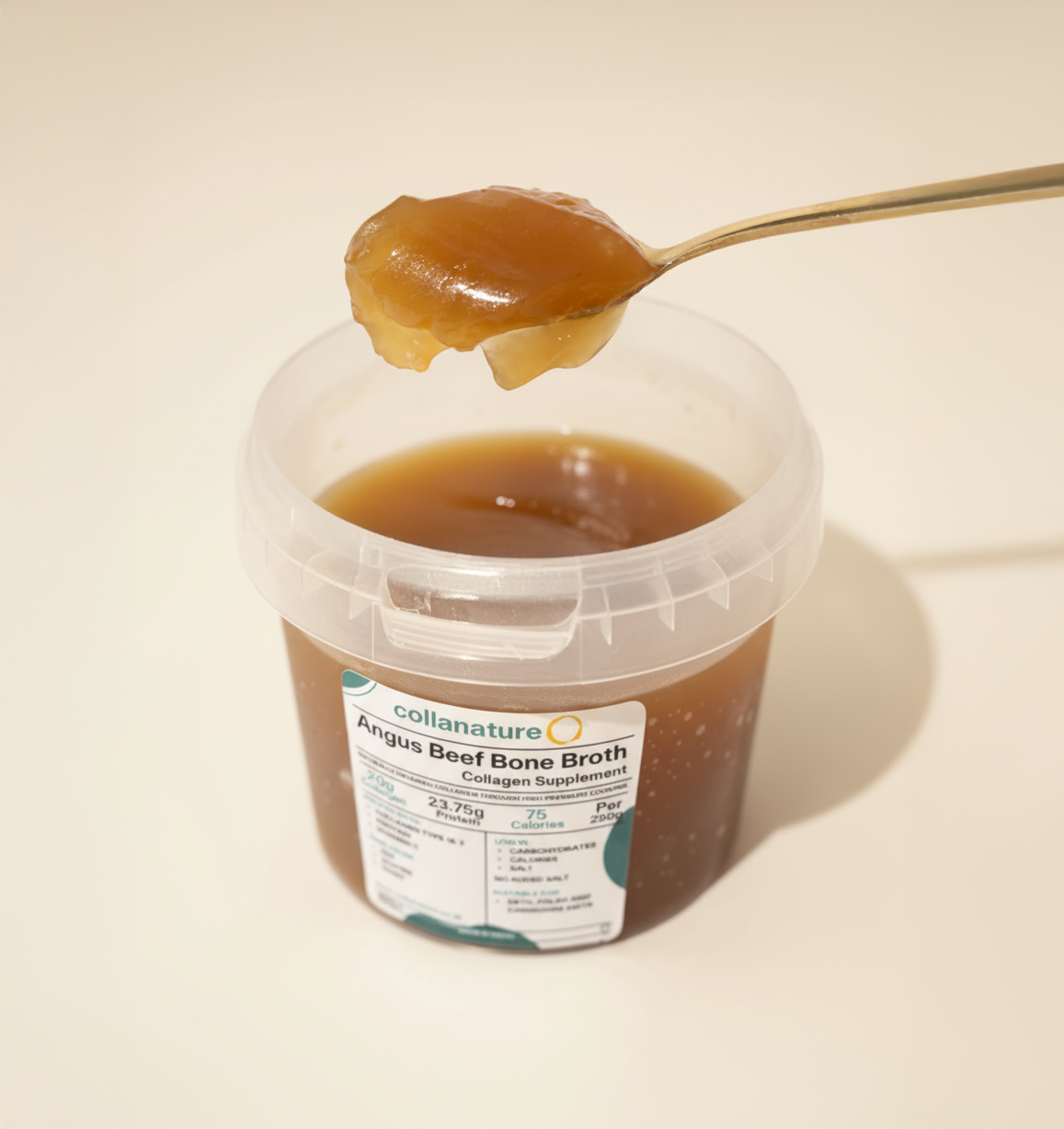
When fascia becomes dehydrated or loses its flexibility due to age or lack of nutrients, it pulls down unevenly on the skin, which can worsen the look of cellulite. Collanature Bone Broth feeds the fascia. It provides the specific amino acids (Proline and Glycine) and Hyaluronic Acid required to keep this mesh hydrated and flexible. By supporting the density of the dermis from the inside, you create a stronger "lid" on the fat cells, making the surface appear smoother.
3. The Sugar Connection and Glycation
If you want to improve the appearance of skin texture, you must look at your sugar intake. Sugar affects smooth skin through a process called Glycation. Excess sugar molecules bind to collagen fibres, turning them from flexible bands into stiff, less resilient structures.
This loss of flexibility in the connective tissue bands pulls harder on the skin, deepening the look of dimples. Combining a balanced diet with Angus Bone Broth is a dual strategy. You stop the potential damage of glycation while supplying the raw materials for ongoing maintenance.
4. Hydration: Plumping the Tissue
Dehydrated fascia can become tough and tight. Hydrated fascia is more like a fresh sponge, remaining plump and pliable. Many people try to flush their system with water, but water needs a matrix to hold it.
The Glycosaminoglycans (GAGs) found naturally in bone broth help the connective tissue retain moisture. This increases the plumpness of the skin layers, which can help mask the texture of the fat beneath.
5. Frequently Asked Questions
1. Can collagen permanently remove cellulite?
No nutritional product can completely erase cellulite, as it is largely determined by genetics and anatomy. However, improving skin thickness and connective tissue elasticity can significantly improve the appearance of skin, making texture less visible.
2. Is it related to hormones?
Yes. Oestrogen plays a key role in collagen production. As oestrogen levels shift during menopause, collagen can decrease, and cellulite often appears more prominent. Supporting the body with dietary collagen during these shifts is a smart protective strategy.
3. Does dry brushing help?
Yes, especially when paired with broth. Dry brushing stimulates blood flow to the connective tissue. Drinking collagen before you brush or exercise helps deliver nutrients to the areas you are stimulating.
4. Why do thin people have it?
Because it is about the mesh, not the fat. If a person has weak or brittle connective tissue, even a small amount of body fat can become visible through the skin.
5. How long until I see smoother skin?
Connective tissue turnover is a gradual process. While facial skin may look more vibrant in four weeks, the deep fascia of the thighs and glutes typically requires three to six months of consistent nutritional support to show noticeable changes in texture.
Final Thoughts
You cannot change your genetics, but you can change the quality of your tissue. By feeding your fascia with premium structural nutrition, you strengthen the mesh that holds you together, supporting a firmer and smoother silhouette.
👉 Shop here: Shop Collanature: Strengthen Your Skin's Foundation.


Recent Post