Cart
0
Introduction
There is a growing movement of people abandoning their daily handful of synthetic pills in favor of returning to real, nutrient-dense foods. When it comes to maintaining skin elasticity and supporting joint mobility as we age, the debate often comes down to a simple choice: should you rely on eating collagen-rich foods, or is it better to take a dedicated supplement?
The reality is that modern diets severely lack natural collagen. However, blindly trusting ultra-processed powders can be just as ineffective. Finding the right balance requires understanding how your body actually digests and utilizes this vital protein.
Dietary Collagen vs. Supplements: What is the Difference? (Quick Answer)
Dietary collagen is found exclusively in animal parts like skin, bones, and connective tissues, providing a complex matrix of proteins, gelatin, and minerals. However, the exact concentration in everyday meals is difficult to measure and digest. Standard commercial supplements offer a concentrated dose but are heavily processed using high heat and chemicals, which strips away the natural co-factors needed for optimal absorption. A premium bone broth concentrate bridges this gap, offering a guaranteed 4,000 mg of bioactive collagen per 50g serving while remaining a 100% natural, unrefined whole food.
The Reality of a Collagen-Rich Diet
Centuries ago, our ancestors consumed the entire animal, meaning their diets were naturally rich in collagen from slow-cooked stews, broths, and organ meats. Today, we favor lean muscle meats like chicken breasts and steaks, which contain almost zero collagen.
To acquire meaningful amounts of natural collagen purely through a modern diet, you would need to consume large portions of bone marrow, chicken skin, fish heads, or beef tendons daily. For the vast majority of people, this is practically impossible, time-consuming, and difficult to track in terms of exact nutritional intake.
The Problem with the "Easy" Supplement Route
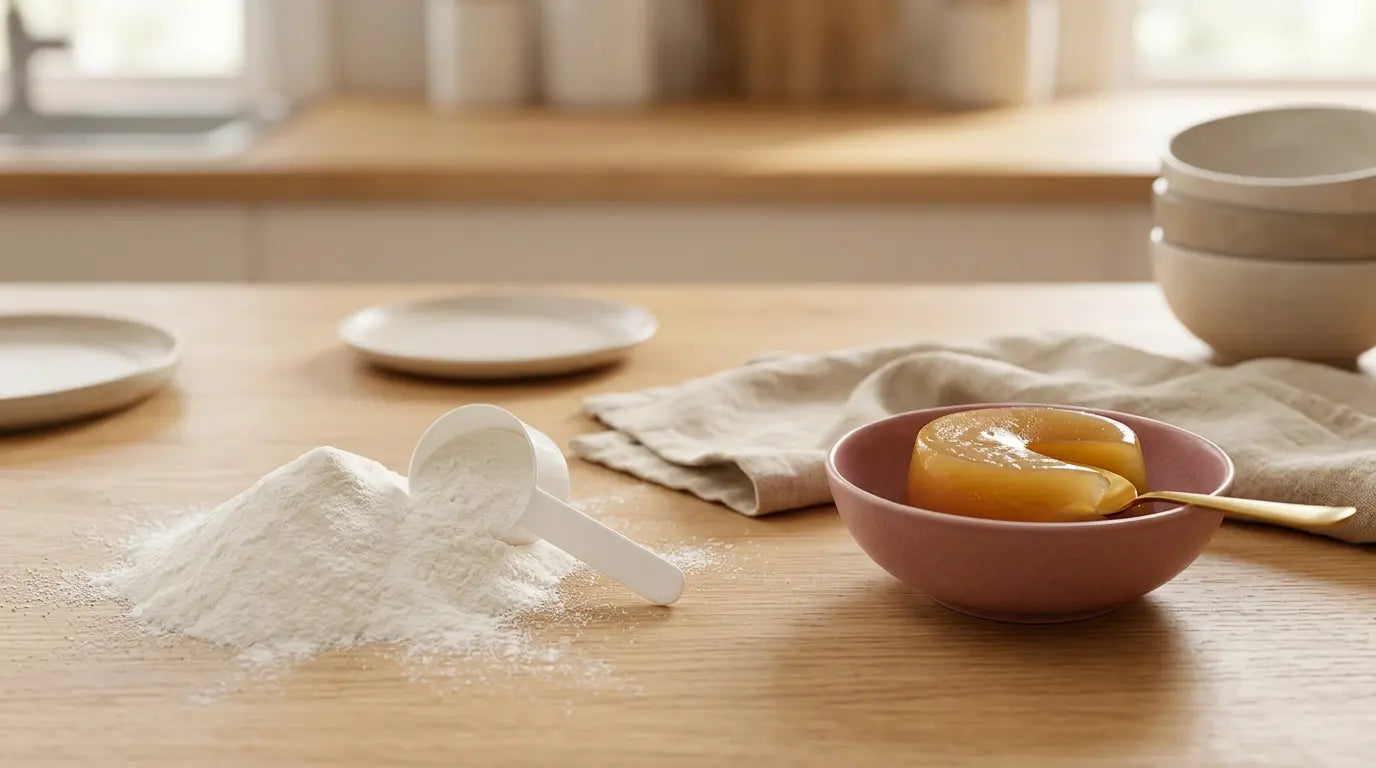
To solve the convenience problem, the supplement industry created hydrolyzed collagen powders. While these products are easy to stir into a glass of water, they are far removed from their natural origins. The aggressive industrial hydrolysis required to turn animal by-products into a white, shelf-stable powder destroys the natural gelatin matrix.
Without this intact gelatin, you lose the gentle, gut-soothing properties that whole-food collagen provides. You are left with an isolated peptide that lacks the synergistic glycosaminoglycans and minerals your body naturally uses to rebuild cartilage and support skin health.
The Ultimate Middle Ground: Concentrated Bone Broth
You do not have to choose between eating tough cuts of meat and settling for synthetic powders. The most elegant solution is to consume collagen in its purest traditional form, but highly concentrated for modern convenience.
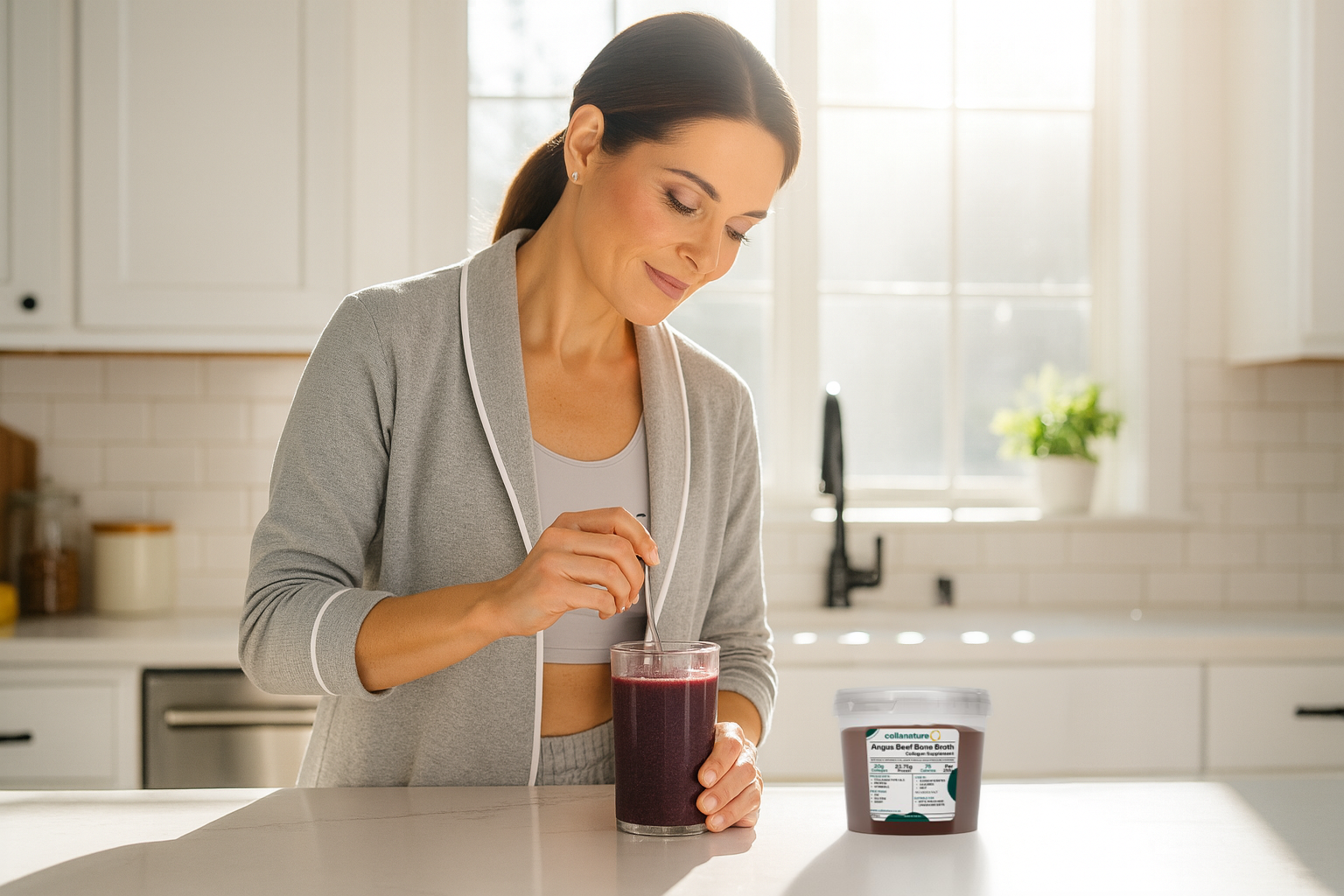
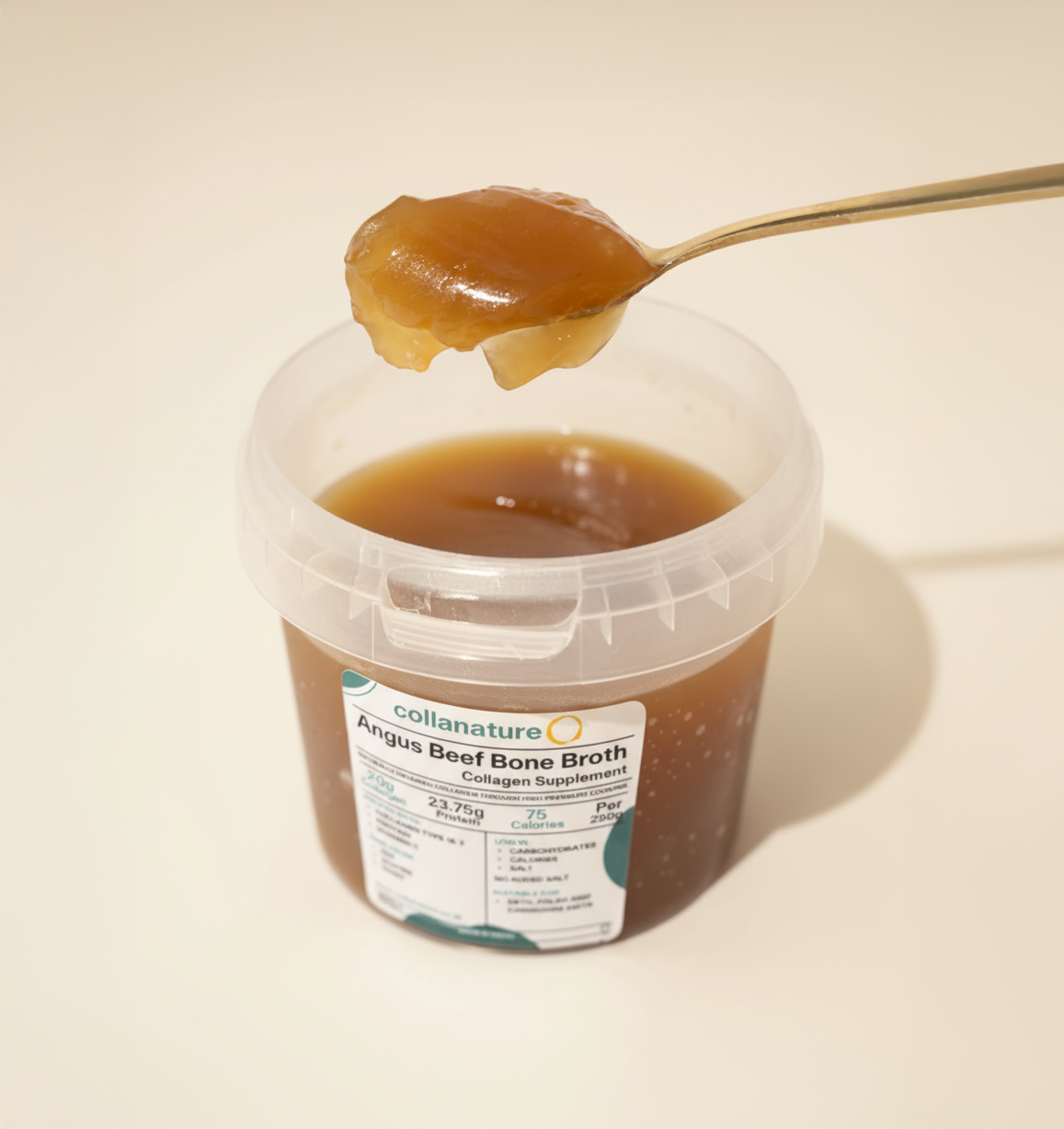
By slow-simmering premium beef bones for 48 hours, Collanature extracts a dense, nutrient-rich gel packed with naturally occurring Types I, II, and III collagen. This process yields 20,000 mg of native collagen per jar without any chemical extraction or artificial preservatives. It is the exact nutritional profile of a perfect ancestral diet, delivered in one simple daily spoonful.
Frequently Asked Questions
Can you get enough collagen just from food?
Yes, but it is highly impractical for most modern lifestyles. It requires consuming substantial amounts of bone broth, animal skins, and connective tissues daily to reach the clinical doses needed to effectively support skin and joint health.
Is bone broth concentrate better than collagen powder?
A natural bone broth concentrate is superior because it retains its whole-food synergy. It preserves the natural gelatin, minerals, and complex amino acids that are often destroyed during the harsh chemical processing used to manufacture standard collagen powders.
How much Collanature should I take daily to see benefits?
For optimal support, a standard 50g serving of Collanature provides 4,000 mg of bioactive, 100% natural collagen. Because it is a highly bioavailable whole food, your body can digest and utilize it efficiently.
Recent Post