Cart
0

The "Healthy Lunch" Paradox
It is a familiar scenario in offices across the UK. You try to be proactive about your health. You skip the heavy sandwich and choose a "Superfood Salad" packed with kale, quinoa, and raw peppers. You feel virtuous while eating it, but by mid-afternoon, you notice a sense of temporary, uncomfortable fullness.
This is the "Healthy Eating Paradox." While raw vegetables are rich in vitamins, they are also demanding for your digestive system. They contain tough cellulose fibres that require significant effort for the body to break down. If your system is focused elsewhere, these fibres can lead to a heavy, bloated feeling. You aren't being "unhealthy"; you are simply asking your gut to do heavy lifting it may not be ready for.
A Naturally Comforting Ritual
If raw kale can be demanding for a sensitive system, Collanature Bone Broth is the nourishing answer. Because of its high natural gelatin content, a warm cup of broth provides a naturally comforting presence for the digestive tract.
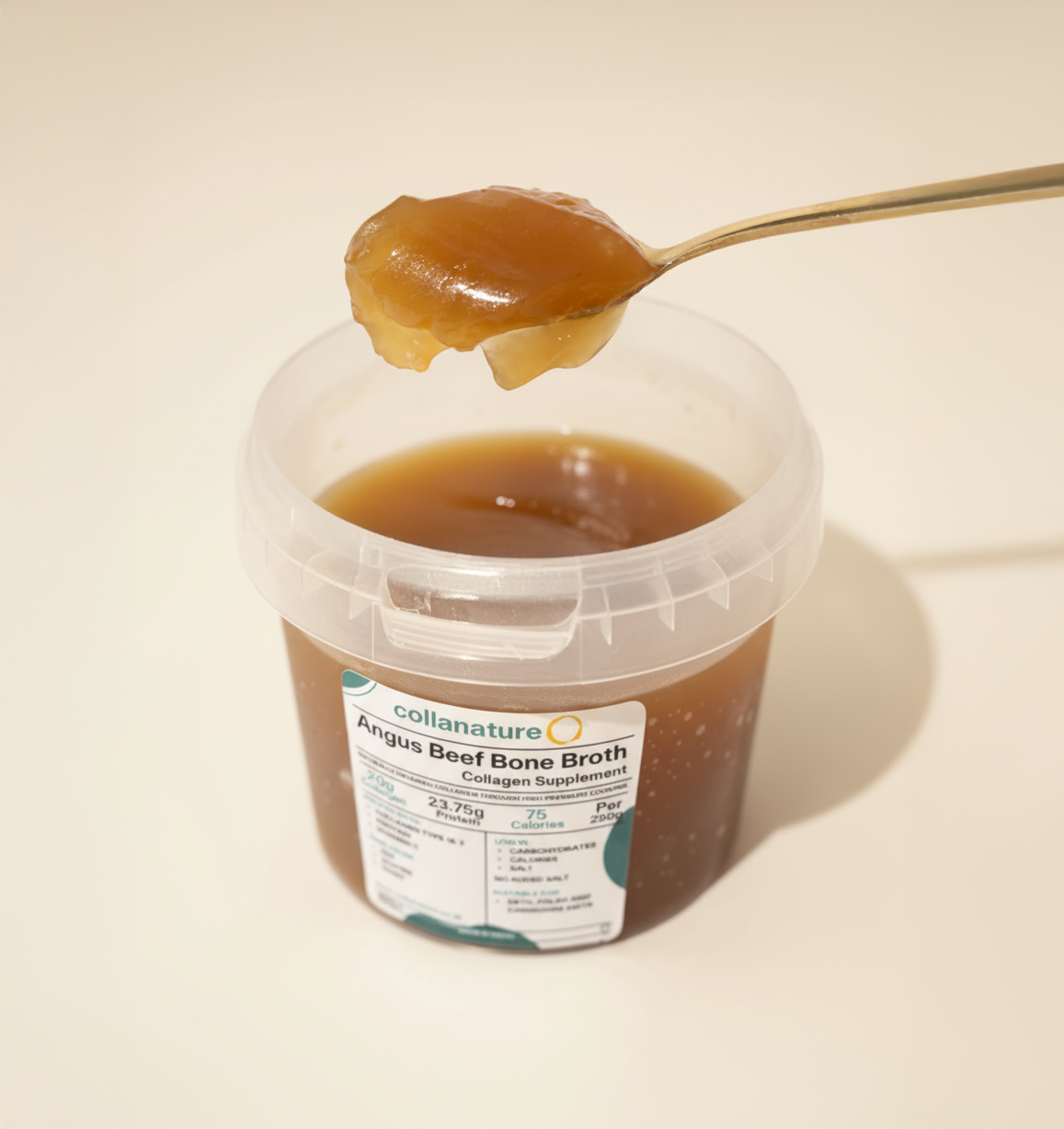
Instead of introducing tough, scratchy fibres, bone broth offers a smooth, liquid form of nutrition that supports the intestinal lining with essential amino acids. Our UK formulation provides 20,000mg of Collagen per serving, combined with CamuCamu (Vitamin C), which contributes to normal collagen formation for the normal function of the digestive system's connective tissues.
Raw vs. Cooked: Why Temperature Matters
Digestion is a process that benefits from warmth. When you consume a cold, raw salad in the middle of a British winter, your body must expend energy simply heating that food to body temperature before the work of breaking it down can even begin.
Collanature Bone Broth is Patiently Simmered for 48 Hours, meaning the proteins are already naturally broken down into easily accessible peptides. Because it is enjoyed warm, it supports the body’s natural enzymatic action without the "shock" of cold food. Swapping a cold lunch for a mug of hot broth and steamed vegetables can transform your afternoon comfort levels.
The Role of Glycine in Daily Comfort
Occasional bloating is often a sign that food is not being processed as efficiently as it could be. Glycine, the primary amino acid in our bovine bone broth, is a critical building block for the body.
By enjoying a small cup of broth shortly before your meal, you are providing your system with the nutrients it needs to support its natural digestive function. This ensures that the nutrients you consume are utilized effectively, helping you maintain a sense of lightness and ease throughout the day.
Choosing Gentleness Over Bulk
We are often told to "eat more fibre," but for a system seeking comfort, extra bulk can sometimes feel overwhelming. During periods when you want to feel your best, a gentle, simplified nutritional approach is often more effective.
Bone broth is the ultimate "gentle" food. It provides high-quality protein and minerals without the fibrous bulk that can lead to gas. This allows your digestive system to receive deep nourishment while maintaining a state of rest and balance.
Frequently Asked Questions
1. Should I stop eating salads?
Not necessarily, but if you struggle with temporary fullness, try swapping raw salads for cooked alternatives, like steamed carrots or soups, for a few weeks. Cooking breaks down the tough cellulose walls, making nutrients more accessible.
2. When should I drink broth to support my comfort?
We recommend a warm cup about 20 minutes before your main meal. This provides a comforting foundation and prepares your system for the nutrition to follow.
3. Does it help with upper digestive sensations?
Many of our customers find the smooth, gelatinous texture very soothing for the entire digestive tract. However, as everyone is unique, we suggest starting with a small serving to see how your body responds.
4. Can I add ginger?
Yes. Ginger is a wonderful addition to your broth. A slice of fresh ginger in hot bone broth creates a warming, powerful ritual for maintaining digestive ease.
5. Is the "Pure" version better for sensitive systems?
Yes. Our Pure (Unsalted) version is the ideal starting point because it contains no added salt or potential aromatics like onion or garlic, making it exceptionally gentle.
Final Thoughts
You don’t have to "punish" your system to be healthy. If raw food causes discomfort, listen to your body’s need for gentleness. Warm, gelatin-rich nutrition is a kind and effective way to nourish your foundation.
👉 Shop here: Shop Collanature: Essential Support for Over 35s.


Recent Post