Cart
0
1. Why Do My Joints Make Noise? (The Science of Crepitus)
That “snap, crackle, and pop” you hear when you squat or climb stairs is medically known as Crepitus. While it can be embarrassing in a quiet yoga class, the noise itself is usually caused by tiny nitrogen bubbles bursting within the joint fluid or by tissues snapping over a bony prominence. However, if the noise is accompanied by a “grating” sensation, it often signals a reduction in Synovial Fluid, the natural lubricant that helps prevent your bones from rubbing against each other.
The “Dry Sponge” Effect
Healthy cartilage is like a wet sponge, plump, slick, and silent. As we age, the quality and quantity of our joint fluid can decline. The “sponge” begins to dry out. The protective gap between the bones narrows, leading to more friction. This is why hydration alone is not always enough. You can drink litres of water, but if you lack the structural matrix (collagen and hyaluronic acid) to hold that water in the joint tissue, the “sponge” remains dry.
2. What Is Synovial Fluid?
Synovial fluid is a thick, egg-white-like substance found in the cavities of your synovial joints. Its primary job is to reduce friction between the articular cartilage of synovial joints during movement. It is non-Newtonian, meaning its viscosity changes depending on the shear stress (movement). It is rich in hyaluronic acid, lubricin, and proteins. Without adequate building blocks, this fluid may become thinner and more watery, losing some of its ability to cushion impact effectively.
The “Oil Change”
Think of your car engine. If the oil is old and thin, the metal parts grind. If the oil is fresh and viscous, they glide. Your body is constantly trying to produce fresh synovial fluid. To do this, it needs raw materials. If your diet is low in collagen and key nutrients, the body may struggle to maintain the ideal viscosity of this vital fluid, leading to that familiar “rusty hinge” feeling.
3. The Role of Hyaluronic Acid (HA)
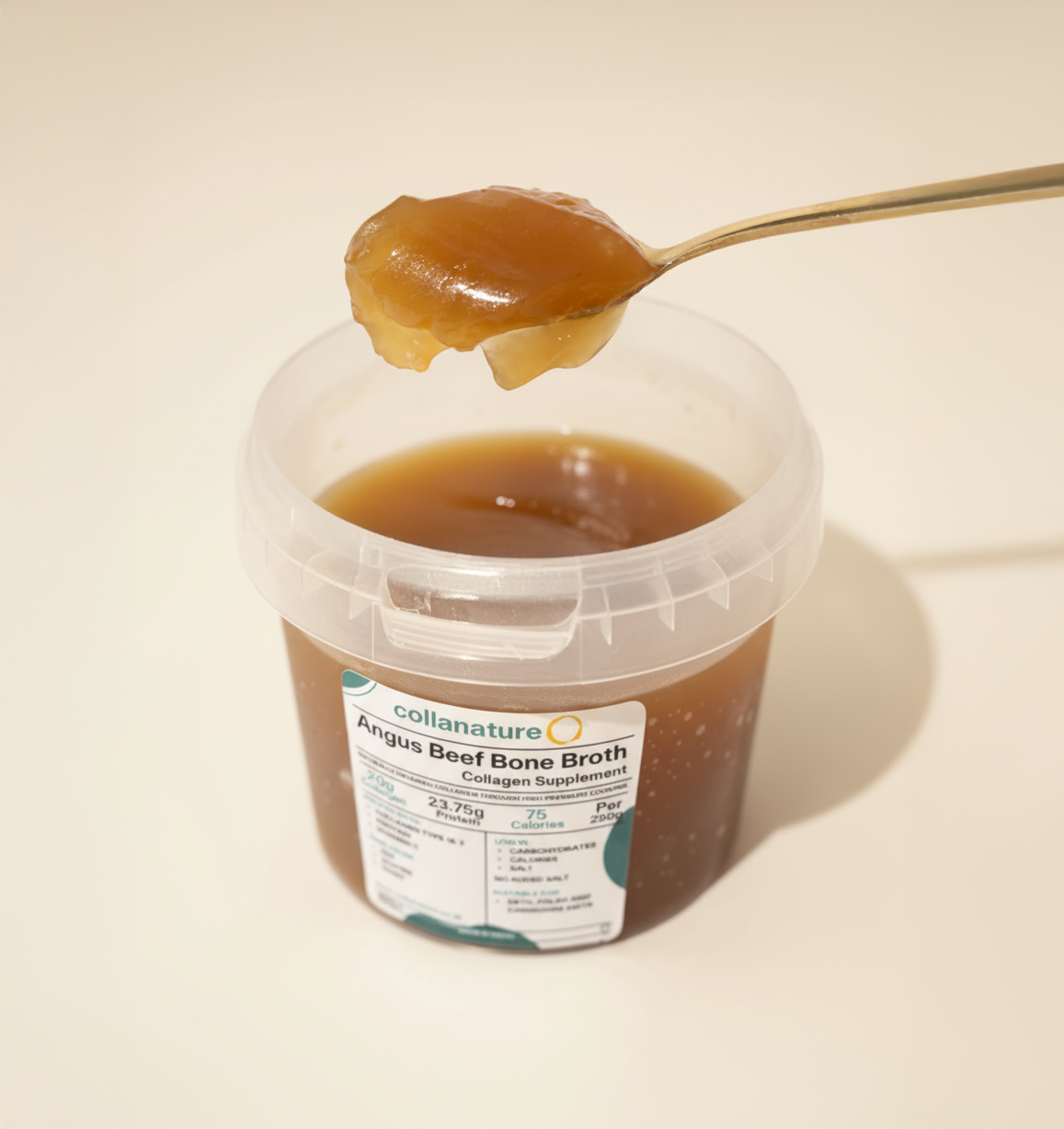
Hyaluronic acid is the “hero ingredient” for lubrication. It is a molecule capable of holding up to 1,000 times its weight in water. Many people spend a fortune on HA serums for their face, but forget that their joints need it just as much. Slow-cooked beef bone broth collagen, such as Collanature Natural 100% Beef Bone Broth Collagen or the gently flavoured Collanature Wild Berries Bone Broth Collagen, naturally delivers glycosaminoglycans (GAGs), including hyaluronic acid, together with collagen peptides in a food form.
Injections vs. Nutrition
In some advanced wear-and-tear cases, doctors may inject synthetic hyaluronic acid directly into the knee. While this can provide temporary relief, it is invasive and time-limited. A nutritional approach works from the inside out. By consistently consuming collagen-rich bone broth, you provide a daily, low-level supply of these lubricating nutrients, supporting the maintenance of a healthy fluid environment over the long term, rather than just addressing the symptom occasionally.
4. “Motion Is Lotion”: Why You Must Move
Nutrition works best when paired with movement. Synovial fluid is unique because it relies on movement to circulate. The cartilage behaves like a sponge: when you put weight on it (compression), waste products are squeezed out. When you release the weight, fresh, nutrient-rich fluid is drawn back in. If you sit still because your knees feel stiff, you limit how much nourishment reaches the joint. Gentle, low-impact movement (like walking, cycling, or swimming) combined with regular collagen intake is a simple way to help “pump” nutrition into the tissue.
5. Frequently Asked Questions
Does the clicking sound mean something is wrong?
Usually, no. Painless clicking is very common and often harmless. However, if the clicking comes with pain, visible swelling, or the joint “locking up,” you should see your GP or a physiotherapist, as this could indicate a mechanical issue such as a meniscus problem.
Can collagen restore the fluid in my joints?
Dietary collagen provides the amino acids and GAGs that the body uses to maintain normal joint structures and function. While it would be inaccurate to say it “refills” the joint like topping up a bottle, it can support the metabolic processes that keep the fluid environment healthy.
How long until the noise stops?
It varies from person to person. Some customers report a “quieting” of their joints after 8–12 weeks of consistent daily use of bone broth (our 90-Day Protocol). Others find that the noise remains, but the sensation of stiffness or discomfort is reduced.
Does dehydration affect my joints?
Yes, it can. If you are systemically dehydrated, your body prioritises vital organs and may draw water away from areas like the joints. This can leave cartilage feeling “drier” and less cushioned. Drinking enough water alongside your daily collagen drink is important to maximise the hydration effect.
Is bone broth better than a glucosamine tablet?
Many people prefer a “food-first” approach. Bone broth contains glucosamine, chondroitin, collagen and minerals together in a natural biological matrix, rather than as isolated salts in a tablet. Tablets can still have a place, but whole foods are often more easily integrated into a long-term routine.
Final Thoughts
A noisy joint is your body asking for attention. Do not ignore the squeak. By combining “motion as lotion” with the deep nutrition of collagen-rich bone broth, you can gently support smoother, more comfortable movement at any age.
Shop Collanature Natural or enjoy the Wild Berries flavour for natural lubrication support.


Recent Post