Cart
0
Is Bone Broth Safe for My Baby?
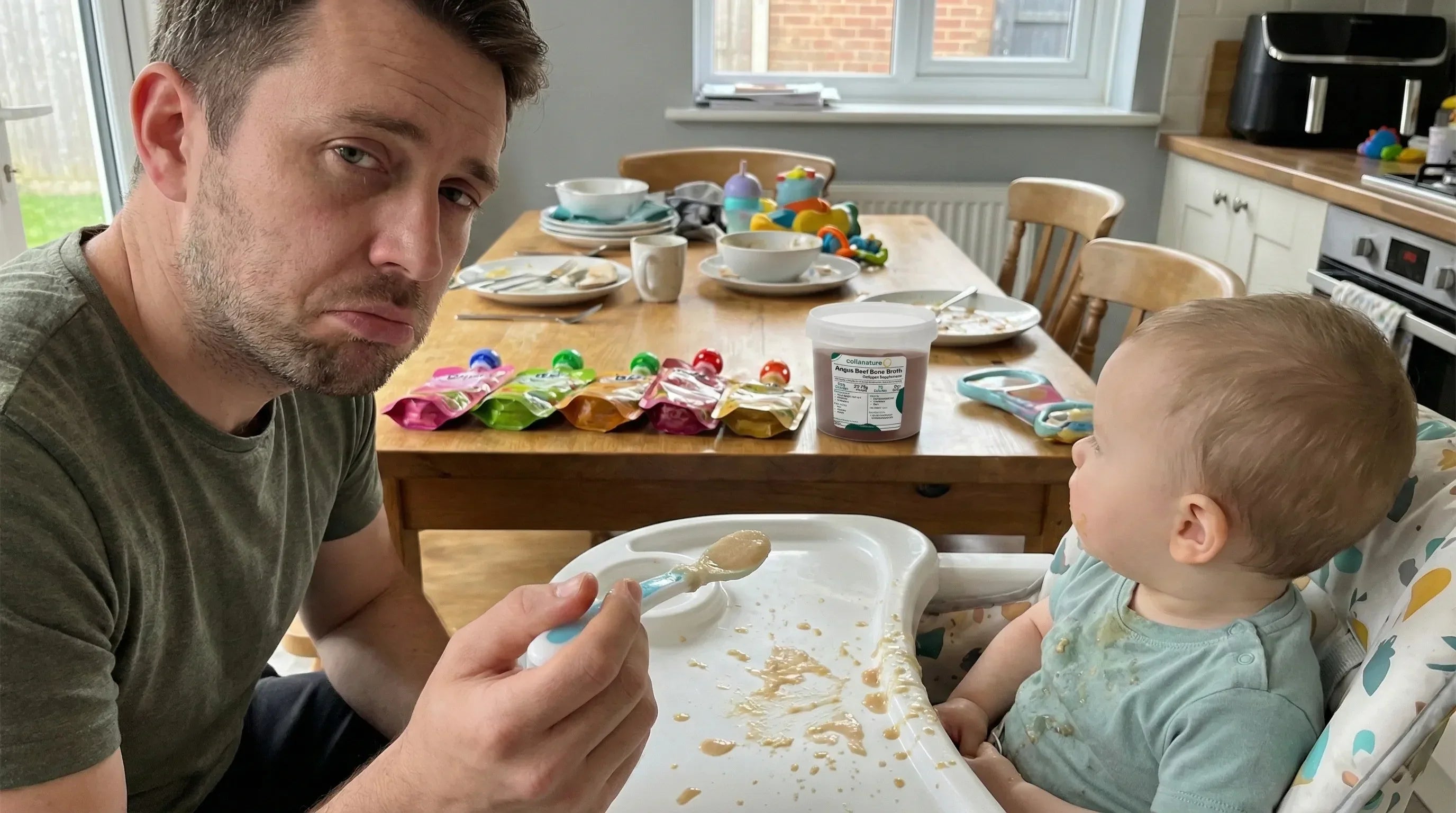
Yes. Bone broth is a traditional, whole-food staple that is safe to introduce during the weaning phase, typically from 6 months, once your baby has started on solids. Historically, nutrient-dense broths were used to provide essential nourishment during early development.
The Golden Rule: Salt Content. A baby’s kidneys are still developing and cannot process high levels of sodium. Therefore, you must only use the Collanature "Pure" (Unsalted) Concentrate. Ensure the broth is cooled to a safe, lukewarm temperature before serving.
The Savoury Solution for Picky Eaters
Raising a child in a world of high-sugar snacks can be a challenge. Bone broth offers a savoury, nutrient-dense alternative to commercial baby foods. It is an excellent way to provide high-quality protein and naturally occurring minerals without any refined sugars, artificial flavourings, or vegetable oils. For children who are selective with their food, broth is often an easy addition when stirred into familiar meals.
Gentle Support for Tiny Tummies
As a baby transitions to solid foods, their digestive system is learning to process new textures and nutrients. The naturally occurring gelatin in bone broth is broken down and incredibly gentle, making it an ideal inclusion during early weaning.
Gelatin helps maintain the integrity of the digestive lining, providing a smooth "bridge" as your little one graduates from milk to more complex, solid foods.
More Than Just Milk: As your child grows, they require specific nutrients to support their developing system:
- Protein for Growth: Essential amino acids like Glycine support the maintenance of connective tissues.
- Mineral Balance: A natural source of calcium and phosphorus, which are necessary for the normal development of bones and teeth.
- Hydration: A warm, electrolyte-rich liquid that provides comfort and hydration during the colder months.
How to Introduce Bone Broth During Weaning
We recommend introducing the concentrate gradually as an ingredient, rather than a standalone drink in a bottle.
- Phase 1 (Mixing): Start by dissolving a quarter-teaspoon of the Pure concentrate into a familiar vegetable purée (such as carrot or butternut squash).
- Phase 2 (Thickening): Use the broth as the liquid base for savoury porridge, rice, or mashed potatoes. The natural gelatin provides a satisfying texture while adding dense nutrition without altering the flavour significantly.
Safety Check: Always taste the food yourself first to confirm it is at a safe temperature and contains no added salt.
Supporting Normal Bone Development
Childhood is a period of rapid skeletal growth. Collagen acts as the essential "framework" upon which minerals like calcium are deposited. By providing high-quality collagen during these formative years, you are providing the structural building blocks the body uses to maintain normal, healthy bone development. This protein framework is vital for maintaining the integrity of the bone matrix as children become more active.
Nourishing the System: Children are constantly interacting with new environments. Bone broth is rich in Glutamine and other amino acids that support the nutritional needs of the gut. Incorporating it into a daily diet helps maintain a healthy internal balance during nursery or school terms.
Frequently Asked Questions
1. Is it safe for babies under 6 months?
Always consult your Health Visitor or GP first. Most UK health guidelines recommend starting solids, including bone broth, only after 6 months.
2. Should I add vegetables to the broth?
For babies under one year, it is best to avoid strong aromatics like onions or garlic, which may be heavy on their digestion. Our "Pure" version is the safest choice as it is a clean beef extract.
3. Is it allergen-friendly?
Collanature Beef Bone Broth is naturally free from common allergens, including gluten, dairy, soy, nuts, and eggs, making it a reliable option for families with sensitivities.
4. Can I give it when my child feels run down?
Yes. A warm, savoury drink provides soothing comfort and essential hydration when a child may not feel like eating solid meals.
5. Why is the unsalted version vital?
Because a child’s kidneys are delicate, managing sodium intake is crucial. Never use "adult" broths or stock cubes, which are often high in salt.
Final Thoughts
Childhood is the foundation of long-term wellbeing. By making bone broth a staple part of your family’s kitchen, you are supporting normal development and a lifetime of wholesome nutritional habits.
👉 Shop here: Shop Collanature: The "Zero-Effort" Broth.


Recent Post