Cart
0

The "Chalk" Problem: Why Hardness Isn't Everything
For decades, the standard advice for women navigating the changes of menopause has been to focus solely on mineral intake, particularly Calcium. While calcium provides necessary hardness, hardness alone is not the full picture of skeletal health.
Think of a piece of chalk. It is high in calcium, but if you drop it, it snaps instantly. It is hard, but it lacks flexibility.
Healthy bone needs to be more like bamboo: hard on the outside, but with a flexible inner matrix that allows it to absorb the impact of daily life. That flexibility comes from Collagen. Without a healthy collagen matrix, bones can lose their natural resilience, making it vital to support the body’s natural structural foundation as we age.
The Scaffold and the Bricks
Bones are living tissues, not solid rocks. They consist of a honeycomb-like scaffold made primarily of Type I Collagen, which is then reinforced with mineral crystals like Calcium and Phosphorus.
- Collagen: Think of this as the steel frame of a building.
- Calcium: These are the bricks or the concrete poured over the frame.
If you pour concrete without a stable steel frame, the structure lacks true integrity. During menopause, natural hormonal shifts can lead to a faster turnover of this collagen scaffold. To support the maintenance of normal bone density, you must ensure the "frame" is well-nourished. Simply adding more minerals is often less effective if the underlying collagen network isn't being supported.
Why Bone Broth is a Foundational Solution
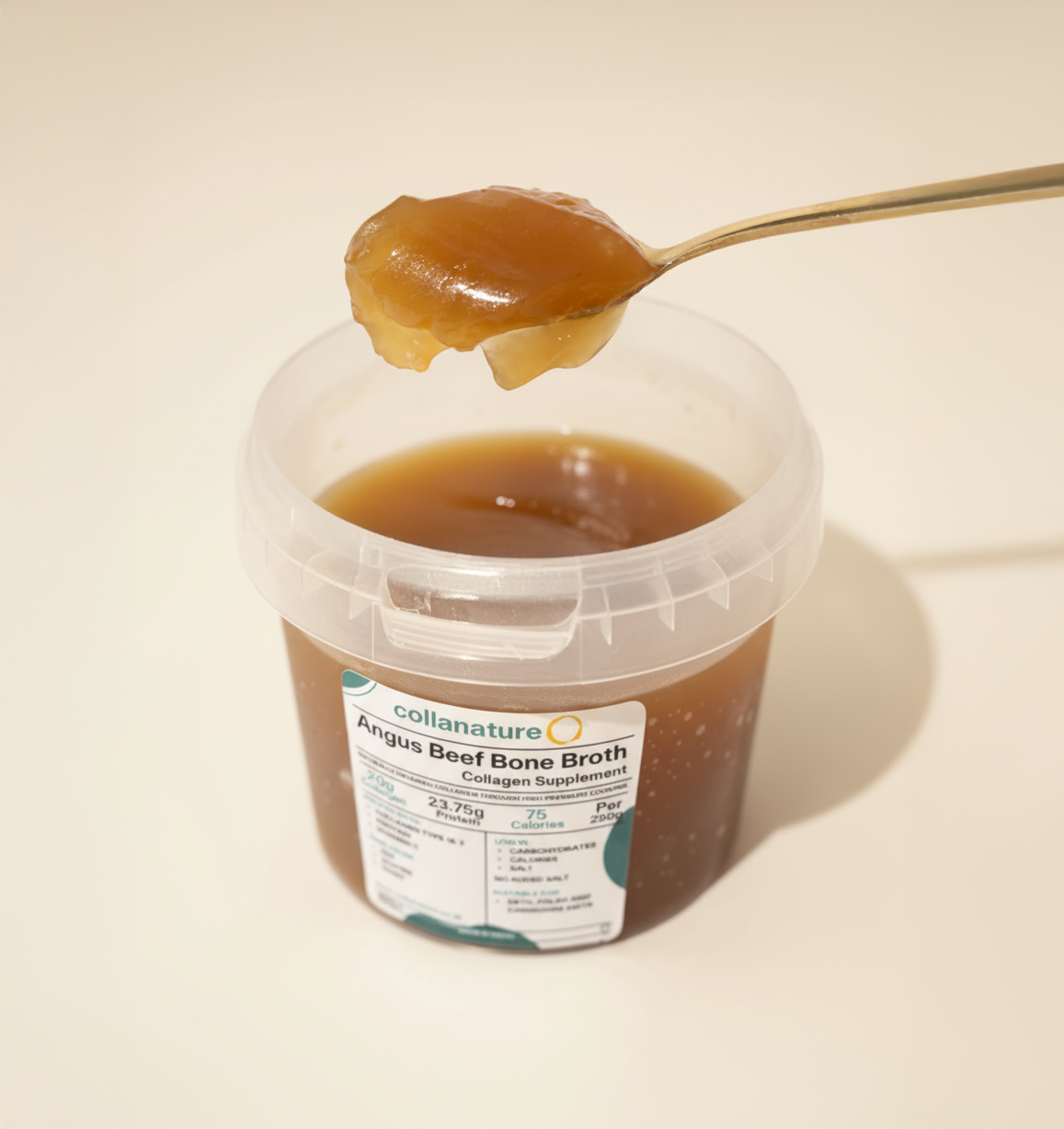
Nature packages bone nutrients in a way that the body recognizes. While an isolated mineral tablet provides a single element, Collanature Bone Broth is a whole-food extract. When you enjoy our broth, you are consuming a natural ratio of Calcium, Magnesium, and Phosphorus, all held within a dense collagen protein matrix.
Our UK formulation delivers 20,000mg of Collagen per serving, enriched with CamuCamu: a potent natural source of Vitamin C. This is crucial because Vitamin C contributes to normal collagen formation for the normal function of bones. It provides the system with exactly what it needs to support its own structural integrity.
The Protein Factor for Women Over 35
Protein intake is a vital, yet often overlooked, factor in skeletal wellbeing. Research indicates that maintaining adequate protein levels is linked to supporting healthy bone density. However, as our systems change with age, some women find it difficult to digest heavy meat meals or dense plant proteins.
Collanature Concentrate provides a solution through "pre-digested" (hydrolyzed) protein. It is exceptionally gentle on the stomach while delivering critical amino acids like Lysine and Proline. These are essential building blocks for maintaining the structural foundation of the skeleton without the digestive heaviness associated with traditional protein sources.
Frequently Asked Questions
1. Can I use this alongside my Calcium supplements?
Always consult your GP before changing any prescribed routine. However, adding Bone Broth to your diet is an excellent way to provide the protein "home" that minerals need to be utilized effectively by the body.
2. Does this help with early structural maintenance?
The earlier you begin supporting your collagen matrix, the better. Providing targeted nutrition during the initial stages of hormonal change is an ideal way to support the maintenance of normal bone density and skeletal health.
3. Why are healthy fats important?
Natural animal fats often contain essential co-factors that act as "guides," helping the body distribute nutrients effectively. Our Bone Broth naturally preserves these beneficial elements as nature intended.
4. Is movement still necessary?
Absolutely. Nutrition provides the building blocks, but movement provides the stimulus. Weight-bearing activities like walking signal your body to maintain its strength. Combining active habits with daily Bone Broth is a "Gold Standard" approach to wellness.
5. How much broth is recommended for support?
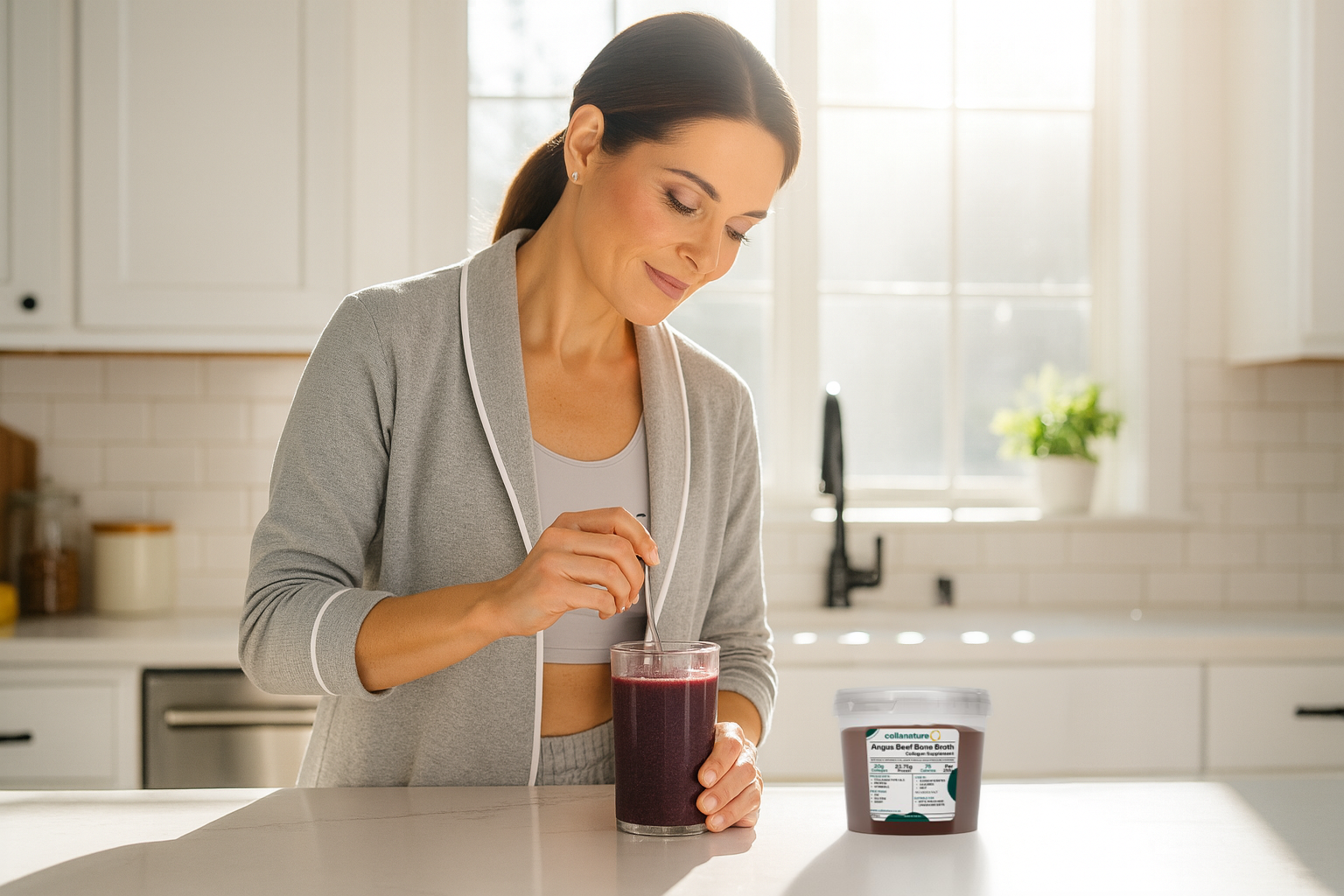
We recommend a consistent daily habit: 1 tablespoon (15g) in hot water every day. In the journey of structural health, consistency is far more impactful than quantity.
Final Thoughts
Don't just aim for "hard" bones; aim for resilient, flexible bones. By nourishing the collagen matrix, you ensure your skeleton has the natural strength and flexibility to support you through every stage of life.
👉 Shop here: Shop Collanature: Essential Support for Over 35s.


Recent Post