Cart
0

1. The Glass Nail Problem
We often assume that a strong nail is a hard nail. When our nails start snapping or peeling, we often reach for calcium hardeners. However, hardness without flexibility leads to brittleness. Think of a piece of glass: it is incredibly hard, but if you tap it, it shatters. Now think of a plastic ruler: it is strong because it can bend under pressure and snap back.
If your nails are snapping, they do not necessarily need to be harder; they need to be more resilient. They are often dehydrated, lacking the internal moisture and protein structure that allows them to absorb the shock of daily activities like typing or opening containers.
The Peeling Layers Sign: When a nail peels in layers, it is a sign that the natural bond holding the keratin layers together has weakened. This bond is both lipid-based and protein-based. Without it, the layers delaminate. While applying polish creates a temporary seal, drinking Bone Broth provides the internal nourishment, specifically the fats and amino acids, to support the layers from the root.
2. Calcium vs. Collagen: The Balance
Nails are made of Keratin, but they are also mineralised.
- Minerals (Calcium, Zinc, Magnesium): Provide the rigidity.
- Protein (Collagen/Keratin): Provides the structure and hydration holding the minerals.
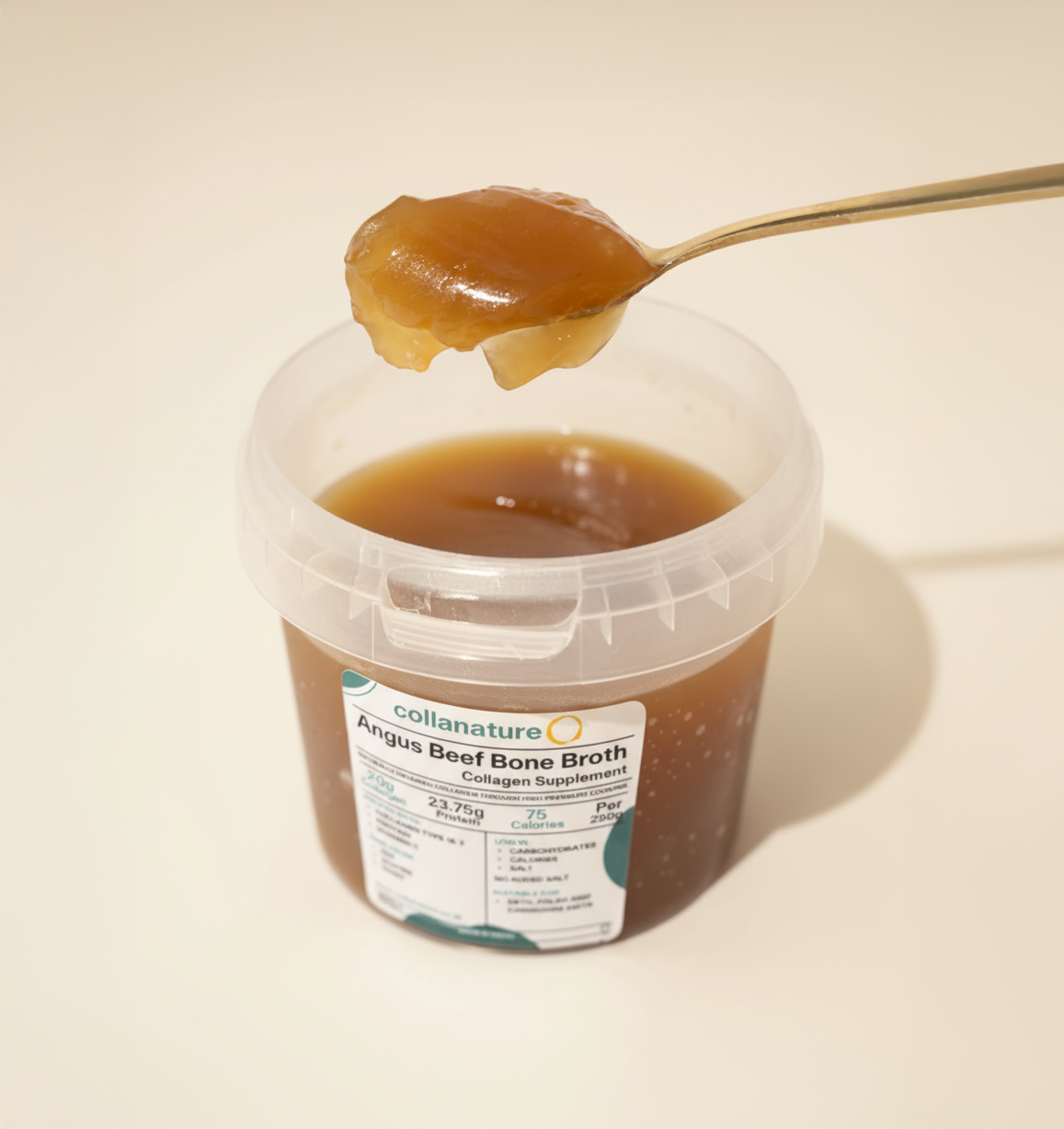
If you take Calcium but lack Collagen, you are building a chalky nail. It will be white and hard, but it will snap easily. Angus Bone Broth provides a dual approach. It delivers minerals in a bioavailable form alongside the collagen peptides needed to keep the nail bed hydrated and flexible.
3. Supporting Natural Circulation
The nail matrix, which is the root under the cuticle, is one of the fastest-growing tissues in the body. It requires a significant supply of oxygen and nutrients. If you have poor circulation or low iron levels, your nails may grow slowly and thinly.
The amino acid Arginine, found in bone broth, helps support natural circulation and blood flow to the extremities. Drinking warm broth helps support the tiny capillaries in your fingers, ensuring that essential nutrients actually reach the area where nail growth begins.
4. Recovering the Natural Nail Plate
The chemical removal process for gel or acrylic nails often strips natural oils and dehydrates the nail plate, leaving it feeling paper-thin. While you take a break from manicures, it is essential to nourish the nail from the inside.
Collagen supplementation has been associated with supporting the rate of nail growth and maintaining the structural integrity of the nail. This helps support the natural replacement of the nail plate, allowing the stronger, nourished nail to grow out more effectively.
5. Frequently Asked Questions
1. Do white spots mean I need calcium?
Not always. White spots are often just signs of minor trauma from previous bumps. However, they can sometimes indicate a need for more Zinc. Bone broth is a natural source of trace minerals including Zinc.
2. How long to support peeling nails?
A fingernail takes about 6 months to grow from root to edge. You will see improvements in the cuticle area first, with smoother growth appearing within 4 to 8 weeks. Maintaining the strength of the tip requires patience as the older growth is replaced.
3. Why do I have vertical ridges?
Vertical ridges are often a sign of natural ageing and dehydration of the nail plate. Increasing your intake of moisture-holding nutrients and Collagen through broth can help rehydrate the matrix and support smoother growth.
4. Is Biotin essential?
Biotin works best in partnership with other nutrients. Biotin supports the systems that build Keratin, while Collagen provides the building blocks. You need both for the best structural results.
5. Does water damage nails?
Yes. Constant expansion and contraction from water exposure weakens the layers. We recommend wearing gloves for household tasks and drinking broth to improve the nail's internal water-holding capacity.
Final Thoughts
Don't settle for nails that act like glass. By balancing minerals with collagen protein, you can build nails that are strong enough to work, but flexible enough to last.
👉 Shop here: Shop Collanature: Support Your Natural Nail Strength.


Recent Post