Cart
0

1. The Luxury Tissue Theory
It is a distressing moment when you look down at the hairbrush and see more strands than usual. We often look for external solutions like shampoos or serums, but the root cause is frequently internal. Biologically, your hair is considered a non-essential tissue. Unlike your heart, liver, or brain, you can survive without it.
When your body is under stress or lacking sufficient protein, it makes a strategic decision. It diverts precious nutrients to the vital organs to keep you functioning, often reducing the supply to hair follicles. This can cause more hair to enter the shedding phase prematurely. To support hair retention, you must provide your body with enough nutrition to afford the luxury of vibrant hair again.
2. Keratin Needs a Foundation
Hair is primarily made of a protein called Keratin. To produce this protein, your body needs specific amino acids, most notably Proline, Cysteine, and Glycine. If your diet is low in these specific building blocks, you are not providing the materials needed for healthy hair.
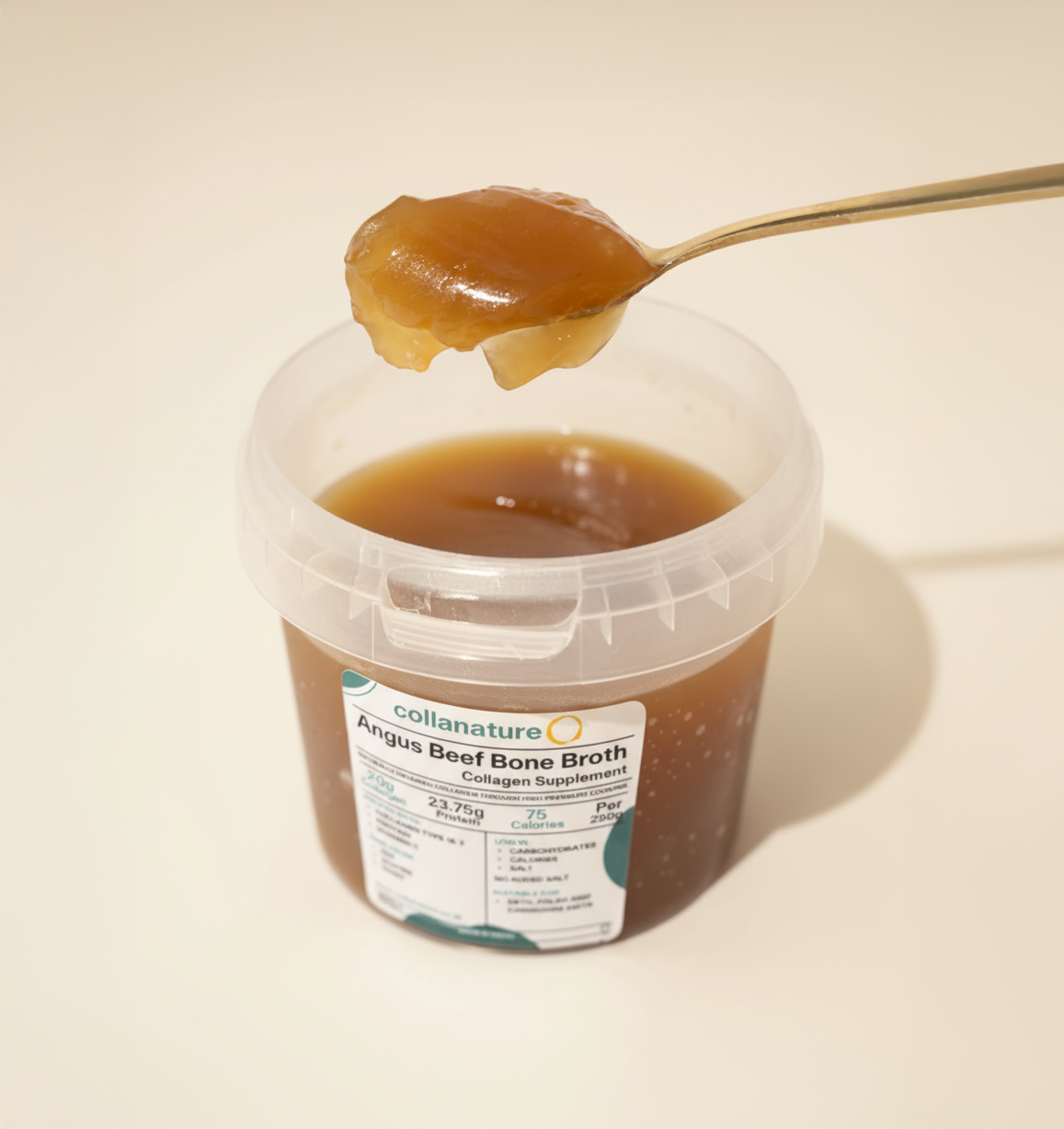
Angus Bone Broth is unusually rich in Proline. By drinking it, you provide your bloodstream with the building blocks required for keratin synthesis. This acts as a signal to the body that resources are abundant, supporting the natural maintenance of your hair.
3. The Soil and Plant Analogy
Think of your scalp as the soil and your hair as the plant. You can treat the plant itself, but if the soil is thin or depleted, the plant will not remain secure. The hair root is anchored in the Dermis, which is the deeper layer of skin made primarily of collagen.
As we age, or if collagen intake is low, the dermis can thin. This weakens the foundation for the hair root. Consuming collagen helps support the thickness of the dermis, providing a more robust foundation for the hair root to anchor into, which supports natural hair retention.
4. Supporting Hair Through Transitions
Hormonal shifts are major triggers for changes in hair density. During pregnancy, high oestrogen levels often keep hair in the growth phase. When these levels shift after birth or during menopause, it can cause a significant increase in shedding.
While you cannot control these natural shifts, you can control the nutritional environment. Providing a surplus of collagen peptides during these transitions helps support the follicle structure. This can reduce the appearance of thinning and support the healthy growth of new hairs that follow.
5. Frequently Asked Questions
1. Can collagen address male pattern thinning?
No. Male pattern thinning is largely genetic and hormonal. Nutritional support cannot override your DNA. However, it can improve the quality and thickness of the hair you do have, which helps the overall appearance of fullness.
2. Is Biotin better than Collagen?
They work together. Biotin helps the enzymes that build Keratin, while Collagen provides the amino acids (the bricks) to build it. You need both for the best results.
3. How long until I see a difference?
Hair grows slowly, typically about 1cm per month. It usually takes three to four months of consistent nutritional support to notice a reduction in shedding and the appearance of new growth along the hairline.
4. Does bone broth help with grey hair?
There is some anecdotal interest in how antioxidants like Glutathione support the follicle, but clinical data regarding hair colour is limited. It is best to focus on broth for thickness and strength.
5. Should I take it with iron?
Yes. Low iron levels are a common cause of hair thinning in women. Bone broth supports gut comfort, which may help you better absorb essential minerals from your wider diet.
Final Thoughts
Don't just treat the strands, treat the system. By prioritising protein and supporting the foundation of your scalp, you give your hair the best possible chance to grow strong and resilient.
👉 Shop here: Shop Collanature: Nourish Your Hair From the Root.


Recent Post