Cart
0

1. The Front vs. The Back: Where the Truth Lives
In the wellness aisle, the front of the packaging is the “marketing department”. It promises glowing skin, endless energy, and natural purity. The back of the packaging is the “legal department”, where the real story sits.
A genuinely clean label collagen should have an ingredients list you can explain to a child. If you need a chemistry degree to pronounce the ingredients, or the list is full of E-numbers and vague phrases like “anti-caking agent”, you are probably looking at an ultra-processed supplement, not a real food.
The “100% Pure” Loophole
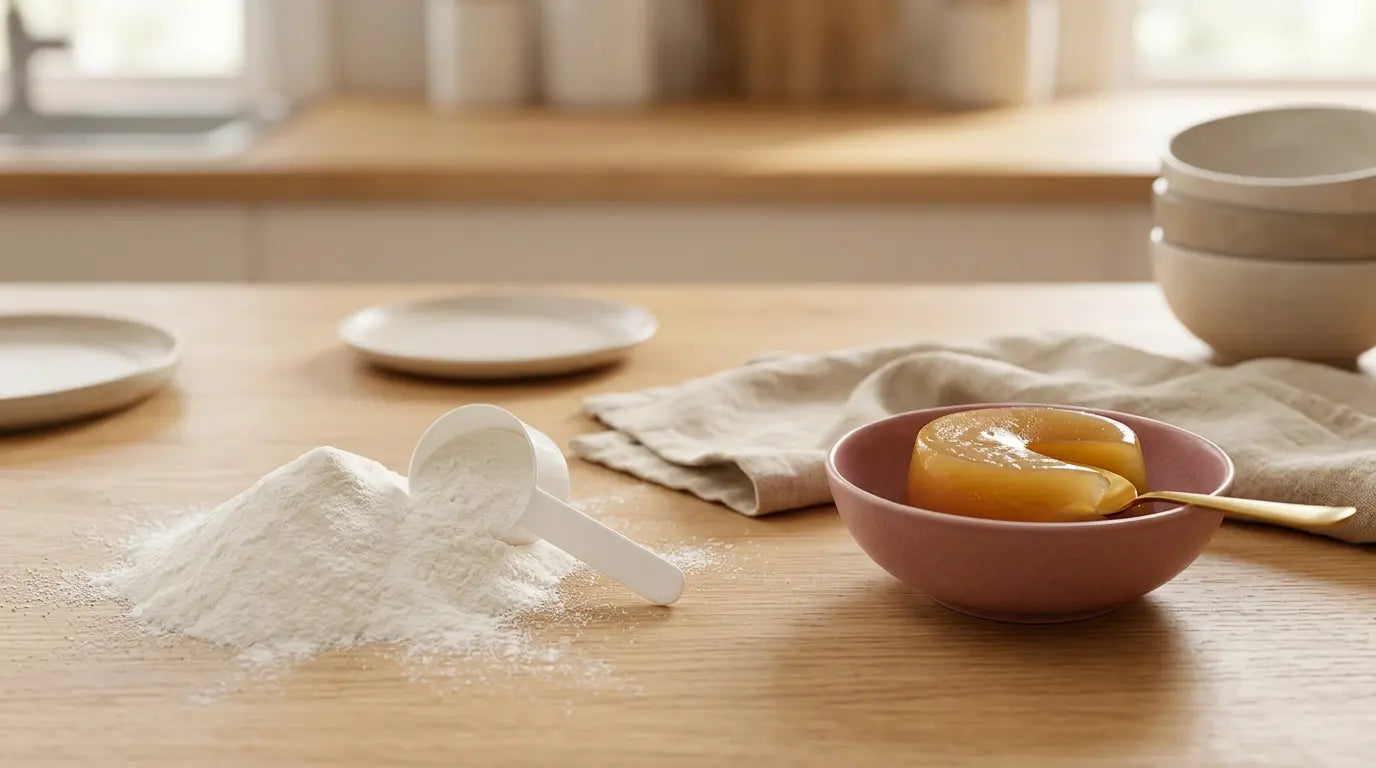
Many brands print “100% pure collagen” on the front, while still using legally permitted processing aids that do not have to be highlighted on the label. That is why some collagen powders never clump, no matter how humid your kitchen is, or taste surprisingly sweet despite being “sugar-free”.
The only way to know what you are actually buying is to turn the tub around and read the back.
2. The “Nasties”: Common Fillers to Watch For
The most common hidden ingredients in collagen powders are “flow agents” and “fillers”. These are not added for your benefit; they are there to make manufacturing faster, cheaper, and easier.
- Silicon dioxide (E551). Used as an anti-caking agent so powder runs smoothly through industrial machines. It is considered safe in small amounts, but it does not add any nutritional value to your collagen.
- Magnesium stearate. A lubricant used in tablets and capsules so they pop out of machines more easily. In typical amounts it is considered safe, but it still does not contribute anything to your health; it simply helps factories run faster.
- Maltodextrin. A cheap carbohydrate filler that bulks up the product. It has a glycaemic index higher than table sugar, which means it can raise blood sugar levels quickly – not ideal if you are following a Keto way of eating or trying to keep blood sugar stable.
Why Collanature Does Not Need Them
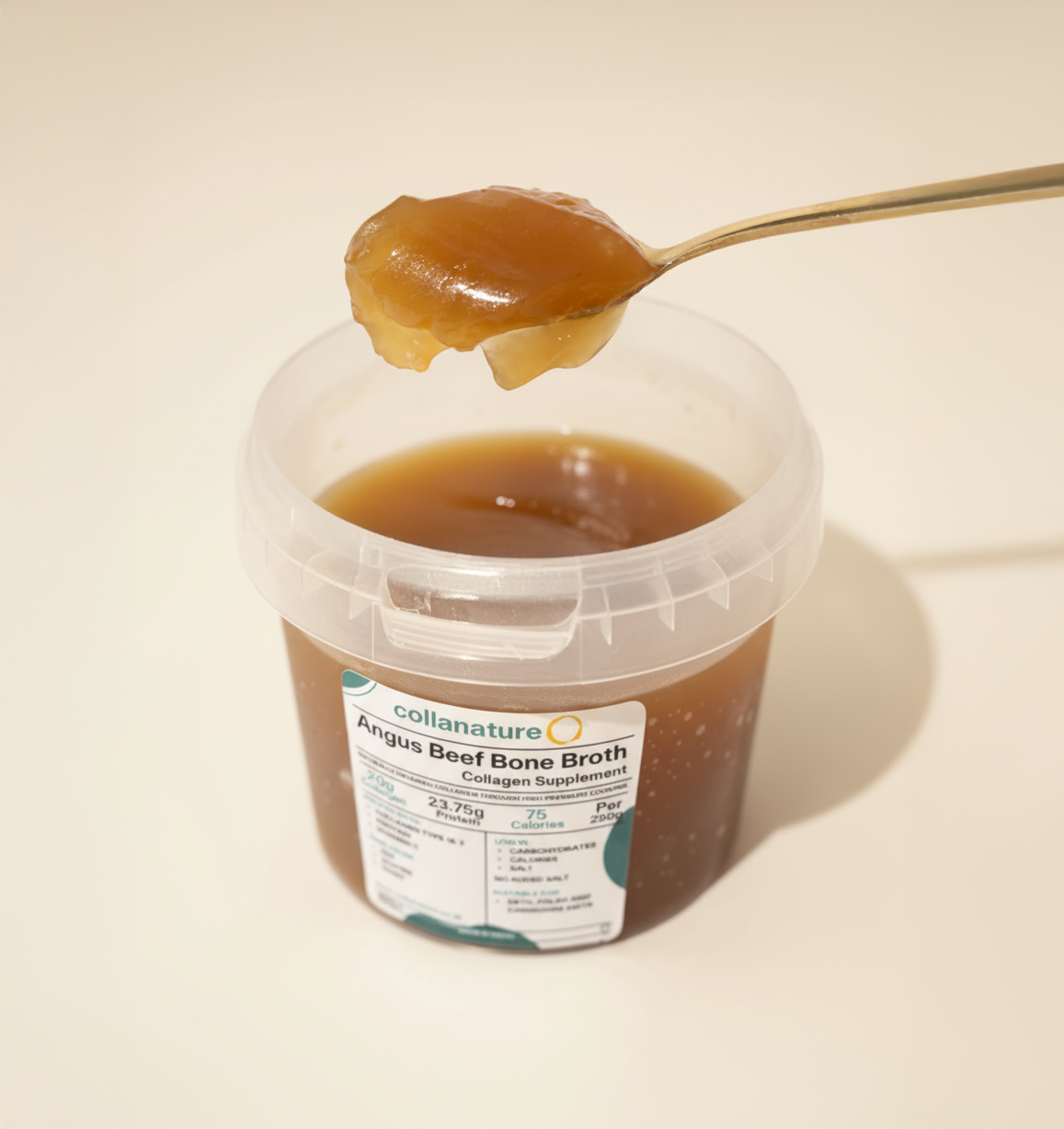
Collanature’s bone broth collagen is a frozen paste, not a dry powder. It is made by slow-cooking beef bones and vegetables into a super-concentrated broth, then blast-freezing it at −18°C.
We do not need flow agents because there is no powder to push through high-speed machinery, and we do not need cheap fillers because the density comes from the natural protein itself.
3. “Natural Flavourings”: The Grey Area
“Natural flavouring” is a legal umbrella term that can cover many individual flavour compounds. In the UK, as long as the original source was natural (for example, a strawberry), the processing used to extract and stabilise that flavour does not have to be listed in detail. The label can simply say “natural flavouring”.
If a collagen or bone broth powder tastes like “chocolate fudge” or “vanilla cream”, it has been heavily engineered to taste like a dessert. Real food tastes like what it is: a strawberry tastes like strawberry, and real bone broth tastes like beef.
4. The Collanature Standard: Short, Real Ingredient Lists
When you care about clean label supplements in the UK, the ingredients list matters more than any headline on the front. With Collanature, the bone broth ingredients list stays short and recognisable.
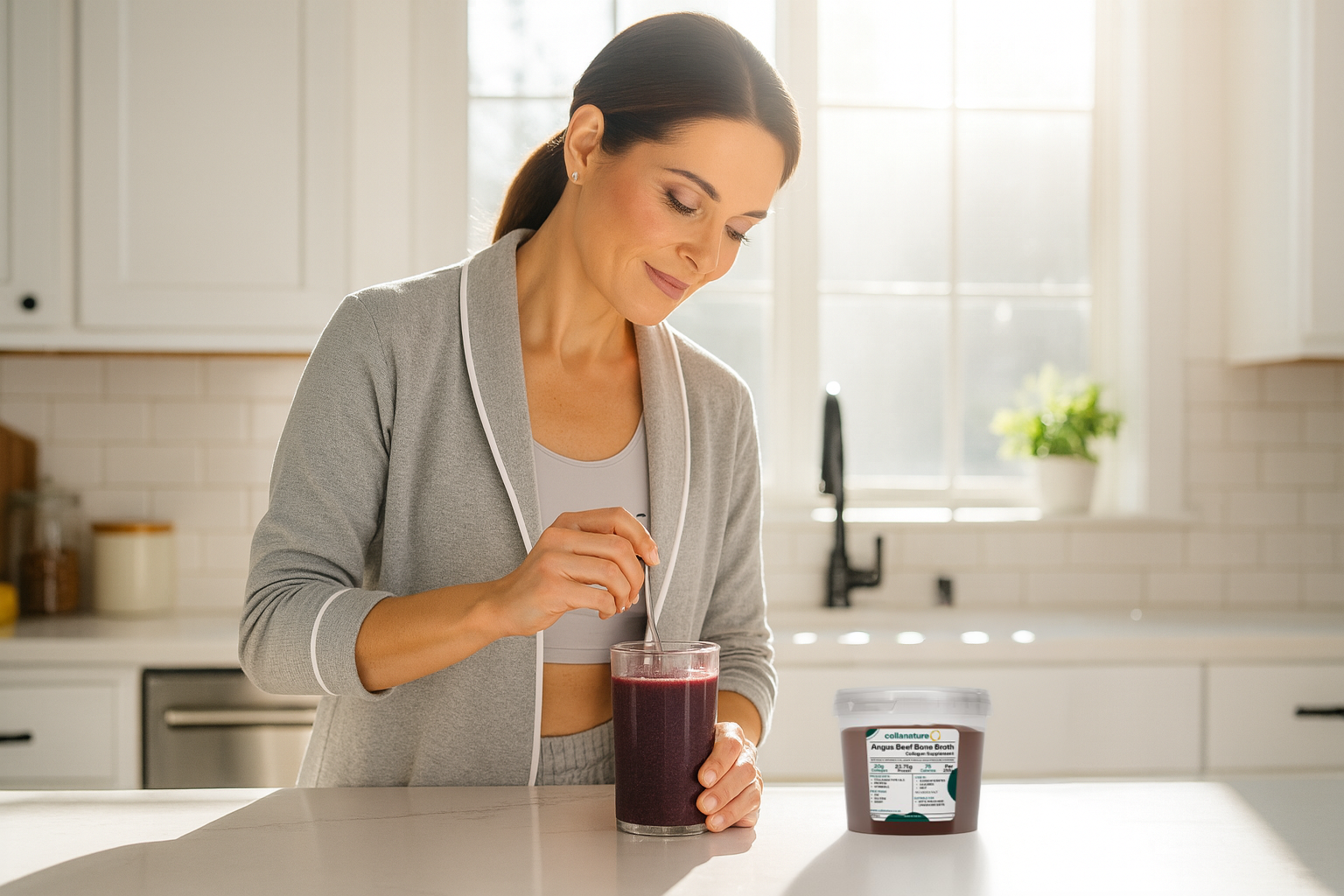
Our Natural Bone Broth Collagen is made from free-range, grass-fed Angus beef bones, cartilage and connective tissue, filtered water and fresh vegetables (onion, celery, carrot). Our Wild Berry Bone Broth Collagen uses the same base, with real wild blueberries and blackberries – no flavourings, colourings or extracts.
There is no added salt, no sugar, no refined oils, no preservatives and nothing artificial. Instead, the broth is slow-cooked for 48 hours, reduced to a super-concentrated paste, then rapidly frozen at −18°C to keep it safe and fresh without artificial preservatives.
That is what “clean label” means for Collanature: you can read every ingredient, picture it in a kitchen, and there is no asterisk hiding fine print.
What Is Yeast Extract and Why Do You Avoid It?
Yeast extract is often used in cheap stock cubes to mimic the savoury “umami” taste of meat. It is a concentrated source of free glutamates. While it is not the same as added MSG, some people prefer to avoid it because they feel it can trigger symptoms such as headaches or bloating.
Collanature relies on the natural savoury taste of slow-cooked beef bones and vegetables, not flavour enhancers.
Why Do Other Brands Use Silicon Dioxide?
Silicon dioxide is a very effective anti-caking agent. It helps powders flow through high-speed machines without clumping, which keeps production fast and efficient.
Collanature chooses a slower, traditional 48-hour simmered bone broth that is turned into a paste and frozen, so we do not need silicon dioxide at all.
Is Your Product GMO-Free?
Yes. Collanature bone broth collagen is made from free-range, grass-fed Angus beef and contains no genetically modified ingredients, as clearly stated on our product pages.
How Can I Tell If My Current Supplement Has Fillers?
Start with the ingredients list, not the nutrition table. If you see words ending in “-ose” (such as sucrose or dextrose), maltodextrin, or phrases like “bulking agent” or “anti-caking agent”, your collagen contains more than just collagen.
Also check the serving size: if you need a very large scoop to get a small amount of protein, the rest of the scoop is mostly flavourings, sugars, or other fillers.
Does “Unflavoured” Automatically Mean “Clean”?
Not necessarily. “Unflavoured” only means no flavour has been added. An unflavoured collagen powder can still contain preservatives, sweeteners, or flow agents such as silicon dioxide.
Always read the ingredients list to see what is really inside.
Final Thoughts
Your body is a temple, not a chemistry set. You would not sprinkle sand or tablet lubricant on your dinner, so there is no reason to accept them in your daily collagen.
Read the label, count the ingredients, and choose the simplest option that still fits your lifestyle.
Shop Collanature – our clean label bone broth collagen


Recent Post