Cart
0

1. What is the Difference Between Collagen Types?
Although there are over 28 known types of collagen in the human body, three of them, Types I, II, and III, make up nearly 90% of our total collagen content. They are chemically distinct. Type I is the strongest, forming the rigid structure of skin, bones, and tendons. Type II is spongy and elastic, found mainly in cartilage and other joint structures. Type III is a mesh-like fibre found in "hollow organs" like the intestines and blood vessels. Choosing a supplement depends largely on which part of your body needs support.
The "Building Site" Analogy
To understand the difference, imagine your body is a building site.
- Type I is the Steel Beams. It provides rigid strength and holds the skyscraper (your skeleton and skin) upright.
- Type II is the Shock Absorber. It is the rubber padding between the floors (your knees and discs) that prevents friction.
- Type III is the Mesh & Cement. It lines the plumbing (gut and arteries) and ensures the internal walls stay sealed and flexible.
Most generic supplements are just "Collagen." A smart consumer looks for the specific Type.
2. Type I: The "Anti-Ageing" Scaffold
Type I is the most abundant collagen in the body. It is the primary structural component of the dermis (skin), bones, tendons, and ligaments. If your goal is strictly aesthetic—reducing fine lines, thickening hair, and strengthening nails—Type I is your priority. It is found in abundance in both Marine (Fish) and Bovine (Beef) sources.
The Bone Density Connection
It is a common misconception that bones are made only of calcium. In reality, the "matrix" of the bone is Type I collagen. The calcium is merely the mineral that hardens it. As we age, we lose this Type I matrix, which contributes to bones becoming more fragile over time. This is one reason why high-quality bovine bone broth collagen (rich in Type I) is a popular choice for people who want to support bone health as they get older.
3. Type III: The "Gut & Vitality" Specialist
Type III collagen is found alongside Type I but has a specific role in tissue elasticity. It is abundant in the intestinal lining, the uterus, and the cardiovascular system. This is the key differentiator between Marine and Bovine collagen. Marine sources generally focus on Type I and provide little or no Type III. If you are looking to support gut integrity or overall tissue elasticity, a high-quality bovine bone broth is often preferred because it naturally delivers this "mesh-like" protein that hollow organs rely on.
The "Baby Collagen"
Type III is often called "Baby Collagen" because it is the first type synthesised by the body during early development and wound repair. It gives young skin that "plump" feel. As we age, Type III degrades faster than Type I. Including collagen-rich foods such as beef bone broth in your diet helps provide the raw materials your body uses to maintain that structural elasticity in both the skin and the digestive tract.
4. What About Type II? (The Joint Specialist)
Type II collagen is found mainly in cartilage. It is usually sourced from chicken sternums (Chicken Collagen). While Angus Bone Broth Concentrate is primarily Types I and III, it supports joints through a different mechanism: it is rich in Glycosaminoglycans (GAGs) like Glucosamine and Chondroitin. These are compounds that help form and maintain the cartilage that cushions your joints.
The "Full Spectrum" Approach
You don't necessarily need to eat Type II to save your Type II. By consuming a high-quality bovine broth (I & III) rich in Proline and Glycine, plus the natural Glucosamine from the bone marrow, you provide raw materials your body can use to maintain the cartilage sponge, even without eating chicken cartilage directly.
5. Frequently Asked Questions
1. Which types are in Collanature Bone Broth?
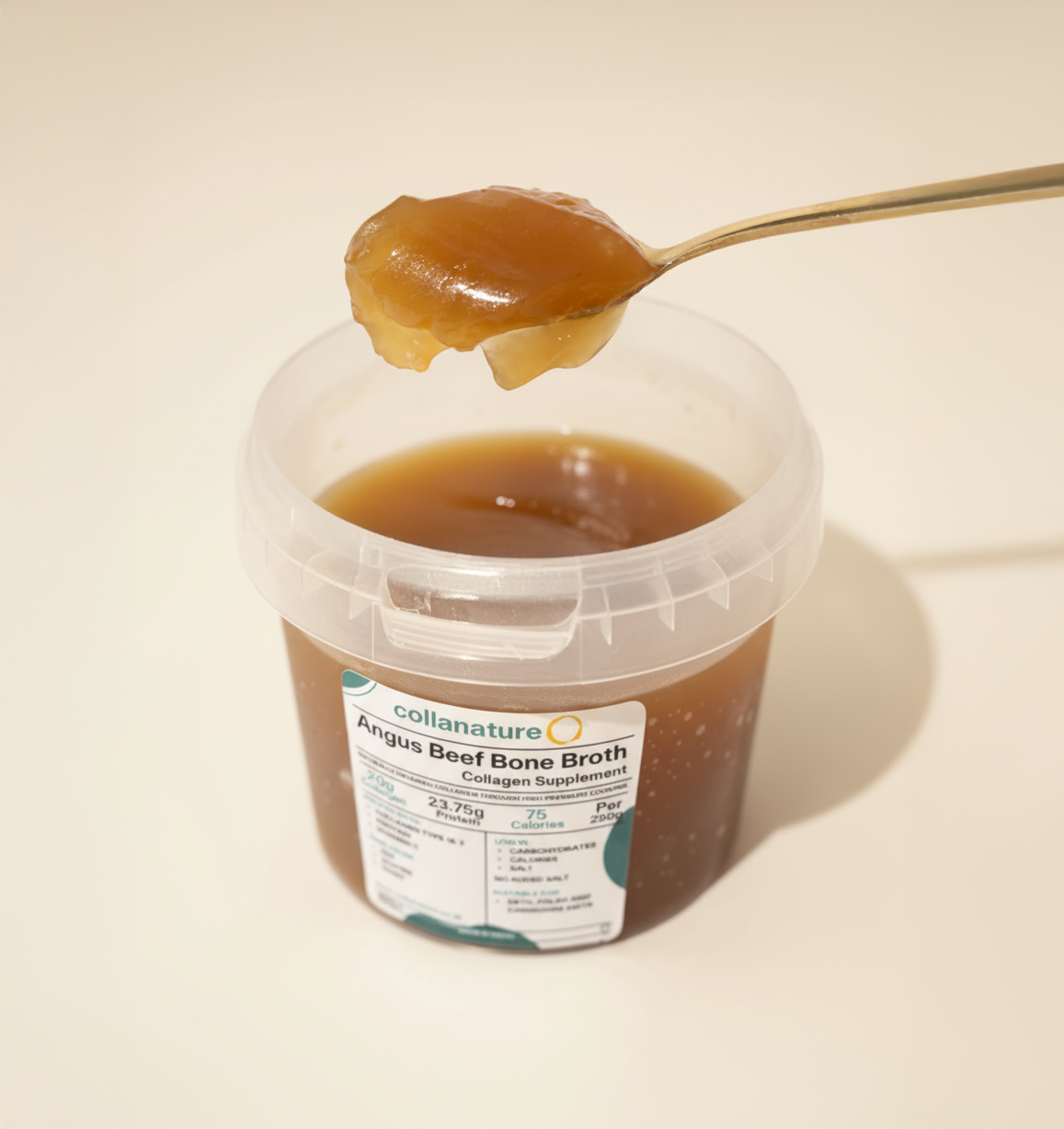
Our Angus Beef Concentrate, available as Natural Bone Broth Collagen and Wild Berries Bone Broth Collagen, is rich in Type I and Type III and also naturally contains Type II from the bones, joints, and cartilage we cook. This makes it a "Dual Action" profile, relevant both for the structural density of skin/bones (Type I) and the elastic integrity of the gut/vessels (Type III).
2. Can I mix Marine and Bovine?
Yes. In fact, many people do. They might take a Marine shot (Type I) for a quick beauty boost and drink bovine broth (Type I & III) — for example, a cup of Collanature Natural Bone Broth Collagen — for deeper nutritional support, including the gut.
3. Is there a "Vegan" Type I?
No. As discussed in our previous articles, plants do not produce collagen types. Vegan "builders" simply provide vitamins and amino acids to help you make your own collagen.
4. Which collagen type is most relevant for gut support?
Type III is generally considered the most important for many soft tissues of the digestive tract. Because bovine bone broth naturally contains both Type I and Type III, many people who want to look after their gut lining prefer bovine collagen over marine-only collagen as part of their routine.
5. Does Type I help with cellulite?
Cellulite is often linked to changes in the connective tissue bands (Type I) under the skin. Supporting these bands with dietary collagen may help maintain the skin's firmness and structure from within, alongside other lifestyle factors. It is not a quick fix or cure, but it can be one helpful part of a broader approach.
Final Thoughts
Don't buy blind. If you want skin and bone support, you will want to focus on Type I. If you want gut and elasticity support, you will also want Type III.
Shop Collanature: Original (Unflavoured) or Wild Berries.


Recent Post