Cart
0

1. Is Your Lunch Causing Your Knee Pain?
We often treat knee stiffness as a purely mechanical issue—a "rusty hinge" that needs oil. However, chronic discomfort is often influenced by systemic inflammation, a kind of chemical fire inside the body. What you eat can either fuel or help calm this fire. You cannot out-supplement an inflammatory diet. If you take premium collagen but wash it down with sugary drinks and ultra-processed foods high in refined carbs and vegetable oils, you are essentially throwing water on the fire with one hand and petrol with the other.
The "Internal Fire" Analogy
Imagine your knee is slightly swollen and irritated. Now, imagine eating foods that are linked with higher levels of inflammatory cytokines—chemical messengers that tell your immune system to react more strongly. This is what often happens when you eat high-sugar, ultra-processed foods. The body enters a state of high alert. To find relief, it helps to follow a two-pronged strategy: add the soothing nutrients (such as bone broth and Omega-3-rich foods) and reduce the usual agitators (excess sugar and heavily refined seed oils).
2. The "Red List": 3 Foods That Agitate Joints
The modern British diet is overloaded with potential pro-inflammatory triggers. Three very common culprits for joint comfort are refined sugar (which drives sharp insulin spikes), industrially processed foods made with refined seed oils (sunflower, rapeseed, soybean oil often found in crisps and ready meals), and for some people, excessive gluten. In the context of an overall unbalanced diet, these foods can increase oxidative stress in the body, which over time may also affect the tissues in and around your joints.
The Omega-6 Trap
Our ancestors are thought to have eaten a ratio of Omega-6 to Omega-3 fats close to 1:1. Today, in the UK, that ratio is often many times higher due to our reliance on cheap vegetable oils in packaged and fried foods.
- Omega-6 (sunflower and other refined vegetable oils): essential but, when eaten in excess and out of balance with Omega-3, can favour pro-inflammatory pathways.
- Omega-3 (from oily fish and grass-fed animal products): supports the body’s natural anti-inflammatory processes.
3. The "Green List": Mobility Allies
To soothe stiff joints, prioritise nutrient-dense whole foods. A simple template includes oily fish (mackerel, salmon) for Omega-3s, cruciferous vegetables (broccoli, Brussels sprouts) that contain compounds such as sulforaphane which have been studied for their potential to support normal joint metabolism, and collagen-rich foods like slow-cooked bone broth. Additionally, spices like turmeric (curcumin) and ginger are widely used to support everyday comfort and mobility as part of a balanced diet.
Where Bone Broth Fits In
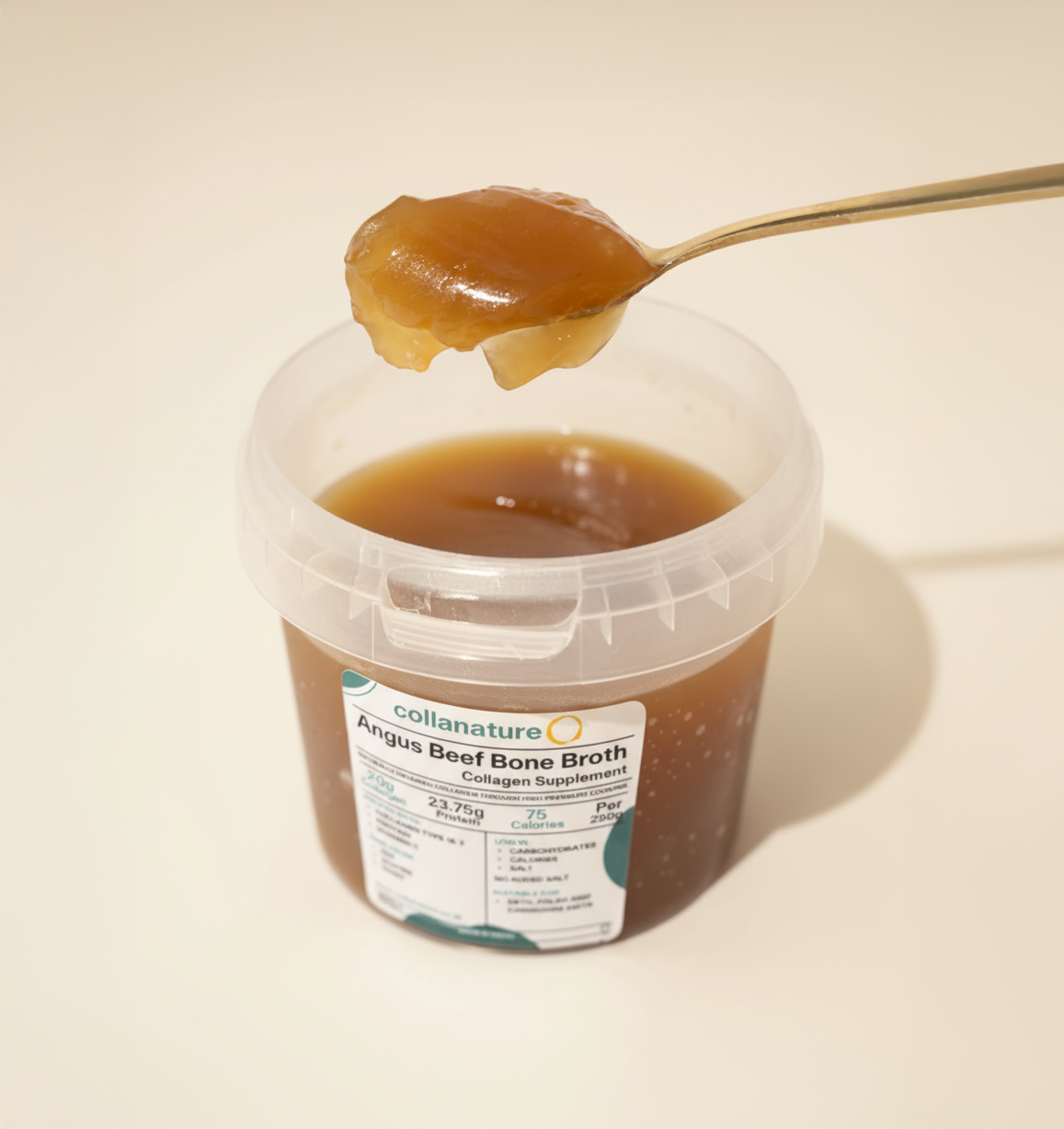
Collanature Angus Bone Broth is the foundation of our "knee-friendly" approach because it is naturally rich in gelatin, providing amino acids such as glycine. Glycine plays roles in immune and inflammatory pathways and helps support normal collagen formation when your overall diet supplies enough vitamin C and other cofactors. By enjoying a cup daily, you are not "medicating" the joint, but you are adding a concentrated, real-food source of structural nutrients to the diet that also helps you build a more supportive metabolic environment for recovery, alongside movement, sleep, and weight management.
4. The Nightshade Debate: Tomatoes and Potatoes
Some people report that "nightshade" vegetables seem to trigger their joint pain. This family includes tomatoes, white potatoes, peppers, and aubergines. They contain a compound called solanine. For most people these foods are perfectly well tolerated, but a small percentage of people with sensitive joints or autoimmune conditions notice that reducing nightshades helps their comfort. Research here is still limited, so the key is listening to your own body.
The Test
One simple experiment some people try (ideally discussed with a healthcare professional) is a short "elimination test." Cut out tomatoes and potatoes for two weeks while keeping your overall diet steady and maintaining your collagen intake. If your knees feel better, you may have identified a personal trigger. If not, you can bring them back. Bio-individuality is key; what works for your neighbour might not work for you.
5. Frequently Asked Questions
1. Does coffee make joint pain worse?
It depends. For many people, moderate coffee is absolutely fine. Very high caffeine intakes, however, may influence stress hormones and sleep quality, which can indirectly affect how the body handles everyday aches. Coffee can also displace water if you sip it all day long, so it is sensible to balance each cup with plenty of plain fluids.
2. Is red meat bad for knees?
Processed meats (like salami or certain cured products high in additives) can be part of a more inflammatory pattern when eaten often. However, fresh, good-quality beef—such as the grass-fed Angus bones we use in our broth—is a source of protein and nutrients. The key is quality, portion size, and how it fits into your overall dietary pattern.
3. Does alcohol affect collagen?
Yes. Alcohol can affect hydration and may deplete certain nutrients, including vitamin C, which is important for normal collagen formation. Frequent or heavy drinking can work against your nutrition goals and may leave joints feeling more uncomfortable the next day. Keeping alcohol intake within official guidelines is the safest choice.
4. Can losing weight help?
Yes. For every pound of body weight lost, the load on the knees during walking is reduced by roughly four pounds. Over thousands of steps per day, this adds up. Combining a lower-sugar, nutrient-dense “knee diet” with collagen-rich foods like bone broth can help you manage weight and reduce mechanical stress on the joints as part of a wider lifestyle plan.
5. How long does it take to “reset” from bad oils?
Cell membranes turn over gradually, so it can take several weeks to months of consistently eating more Omega-3-rich foods and fewer ultra-processed, seed-oil-heavy snacks for your fat balance to shift. There is no instant “detox,” but every small swap you make in favour of real food moves you in the right direction.
Final Thoughts
You hold the remote control to your body's inflammation levels. By swapping the "petrol" foods for soothing whole foods like oily fish, vegetables, and collagen-rich bone broth, you create the best possible conditions for long-term comfort and mobility—alongside movement, sleep, and smart weight management.


Recent Post