Cart
0

1. The "Glass Cannon" Effect
In the UK fitness community, there is a massive focus on building muscle mass using Whey Protein. However, having large, powerful muscles pulling on weak, stiff tendons creates what many physiotherapists describe as a "Glass Cannon"—plenty of power, but fragile structure. Injury often strikes not in the muscle, but in the connective tissue. While whey protein feeds the muscle fibres, collagen is the main protein that makes up tendons, ligaments, and fascia. To build a resilient body that can handle impact, you need both.
The Weakest Link
Think of your body like a crane.
- Muscles are the motor that pulls the load.
- Tendons are the cables. If you upgrade the motor (get stronger) but do not also upgrade the cables (tendons), the cable can fail under the new tension. This is why we see so many Achilles issues in runners and rotator cuff issues in lifters. They ignored the cables. A high-quality bone broth collagen provides the raw materials (Glycine and Proline) your body uses to build and maintain those cables.
2. Whey vs. Collagen: What’s the Difference?
It is a common myth that "protein is protein." The amino acid profile of meat or whey is completely different from that of collagen.
- Whey / Steak: Rich in BCAAs (Branched-Chain Amino Acids like Leucine). These support muscle protein synthesis. Great for size and strength.
- Bone Broth: Rich in Glycine, Proline, and Hydroxyproline. These support collagen formation and the structure of connective tissue. A standard whey shake is relatively low in Glycine compared to bone broth collagen. To support "pre-hab" (injury prevention), you need the specific amino acids found in bone and cartilage.
Using both together — whey for muscles and Collanature Natural Bone Broth Collagen for connective tissue — gives a more complete approach.
3. The Science of "Loading" the Tendon
Timing matters. Some research suggests that a useful time to consume collagen for tendon support is around 30–60 minutes before training. Tendons and ligaments have a very poor blood supply (they are white tissues, not red). They act like sponges. When you exercise, you squeeze the water out; when you relax, they suck fluid back in.
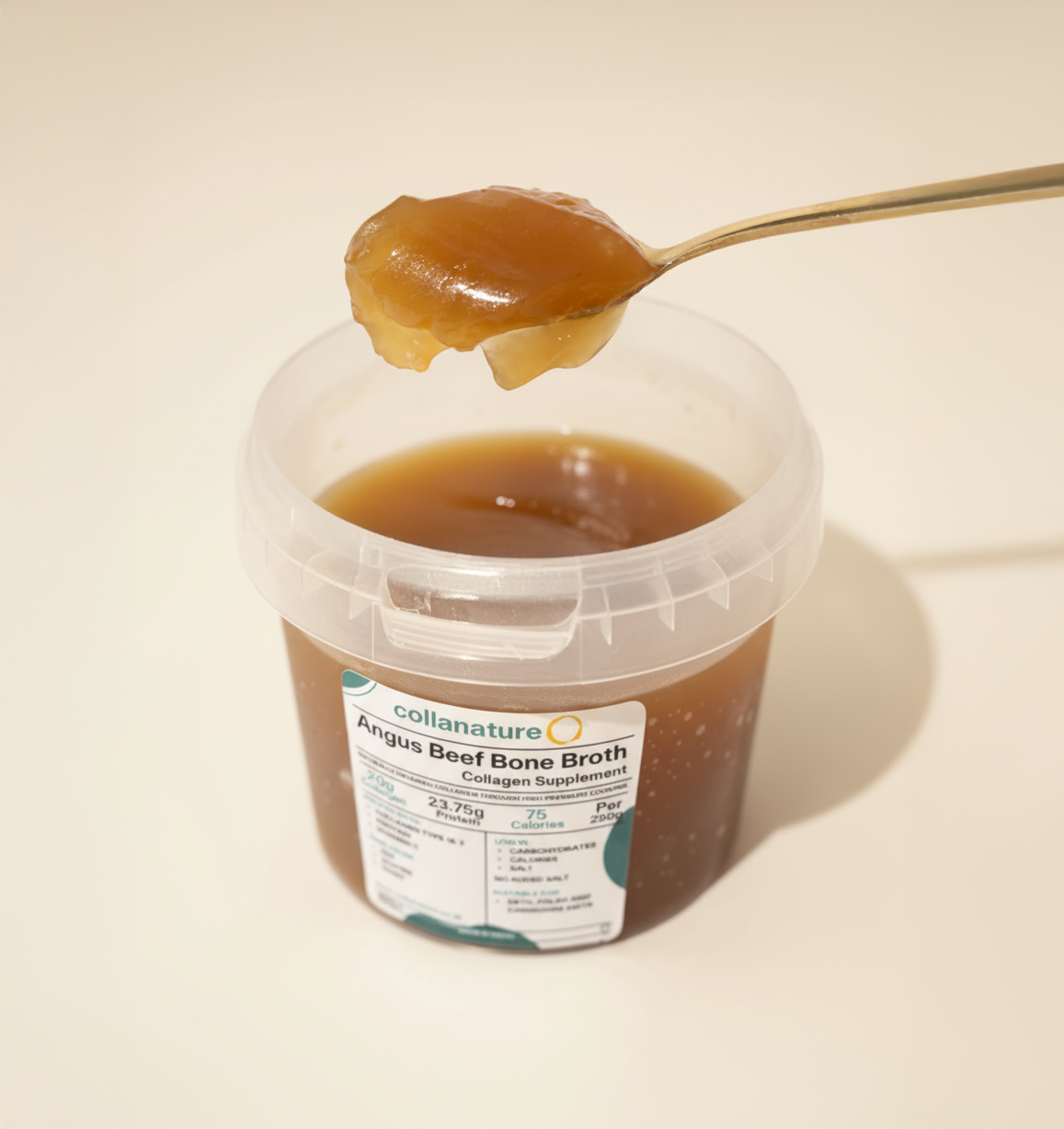
By taking a serving of Collanature Collagen from Beef Bone Broth — ideally with a source of Vitamin C — before you run or lift, you increase the amount of collagen peptides circulating in your blood. As you train, that nutrient-rich fluid is pushed in and out of the tendon matrix, supporting the natural repair and adaptation processes triggered by your workout. It is not a magic fix, but it can be a smart addition to your existing strength and mobility work.
4. Recovery: Beyond the Muscle
Recovery is not just about stopping the ache; it is also about managing overall stress on the body. Intense exercise creates oxidative stress and micro-tears. The rich Glycine content in bone broth plays a role in the body’s inflammatory pathways and in the nervous system. Many people find that including a glycine-rich collagen drink in their evening routine helps them unwind and support quality sleep — the phase where a lot of repair actually happens.
Because Collanature Bone Broth Collagen is a real-food concentrate, it also naturally contains minerals and electrolytes and contributes to your fluid intake. For many runners and gym-goers, it can be a lower-sugar alternative to typical isotonic drinks when they want something warm, savoury, and hydrating after training.
5. Frequently Asked Questions
1. Should I swap my Whey for Collagen?
No, they are partners, not rivals. Keep your whey for post-workout muscle repair. Add Collanature Bone Broth Collagen into your pre-workout routine or evening meal to specifically support joints, tendons, and other connective tissues.
2. Is it good for "Runner’s Knee"?
"Runner’s knee" is a broad term and can have many mechanical and training-related causes, so nutrition alone cannot fix it. However, bone broth collagen naturally contains compounds such as Glucosamine and Chondroitin, which are structural components of cartilage and joint fluid. Including them in your diet can be one supportive piece of a wider strategy that also includes proper footwear, strength work, and guidance from a physiotherapist or sports doctor.
3. Can I put it in my protein shaker?
You can, but remember Collanature is savoury (beef). It will not mix well with a chocolate whey shake! We recommend drinking it separately as a warm savoury shot, or mixing it into a pre-workout meal, soup, or a savoury mug of broth.
4. How much should I take as an athlete?
Training increases your protein and collagen turnover, so consistency matters more than occasional large doses. A simple approach is to follow the serving guidance on the Collanature product page and use it daily during heavy training blocks. If you have specific medical conditions or are under specialist care, discuss the exact amount with your practitioner.
5. Does it help with cramping?
Muscle cramps can be linked to many factors: electrolyte balance, fatigue, training load, or even nerve sensitivity. Bone broth collagen contributes both fluid and naturally occurring minerals, so it can be part of a hydration and recovery strategy. Persistent or severe cramps, however, should always be discussed with a healthcare professional to rule out other causes.
Final Thoughts
You are only as strong as your weakest ligament or tendon. Do not wait for a snap or a tear to think about your connective tissue. Build the chassis as carefully as you build the engine by combining smart training, adequate rest, and targeted nutrition that cares for the "cables" as much as the "motor."


Recent Post