Cart
0

1. Why Do Joints Get Stiff After 40?
It starts subtly, a click in the knee when you stand up, or stiffness in the fingers on a cold morning. This is often due to the gradual reduction of synovial fluid and the thinning of cartilage. As we age, our body produces less of the natural lubricants (like hyaluronic acid) and structural proteins needed to cushion the bones. The Mobility Protocol is not about masking discomfort with painkillers; it is about providing your joint tissue with the specific raw materials it needs to support hydration and smooth movement from the inside out.
The "Dry Hinge" Analogy
Think of your knee or hip like a door hinge. When the hinge is well-oiled, the door swings silently. When the oil dries up, the metal parts rub together, causing friction, heat, and that familiar "creaky" sound. You cannot replace the hinge easily, but you can "top up the oil." Nutrition—specifically collagen and hydration—acts as part of the internal lubricant that helps keep the mechanism gliding as comfortably as possible.
2. The Role of GAGs (Nature's Lubricant)
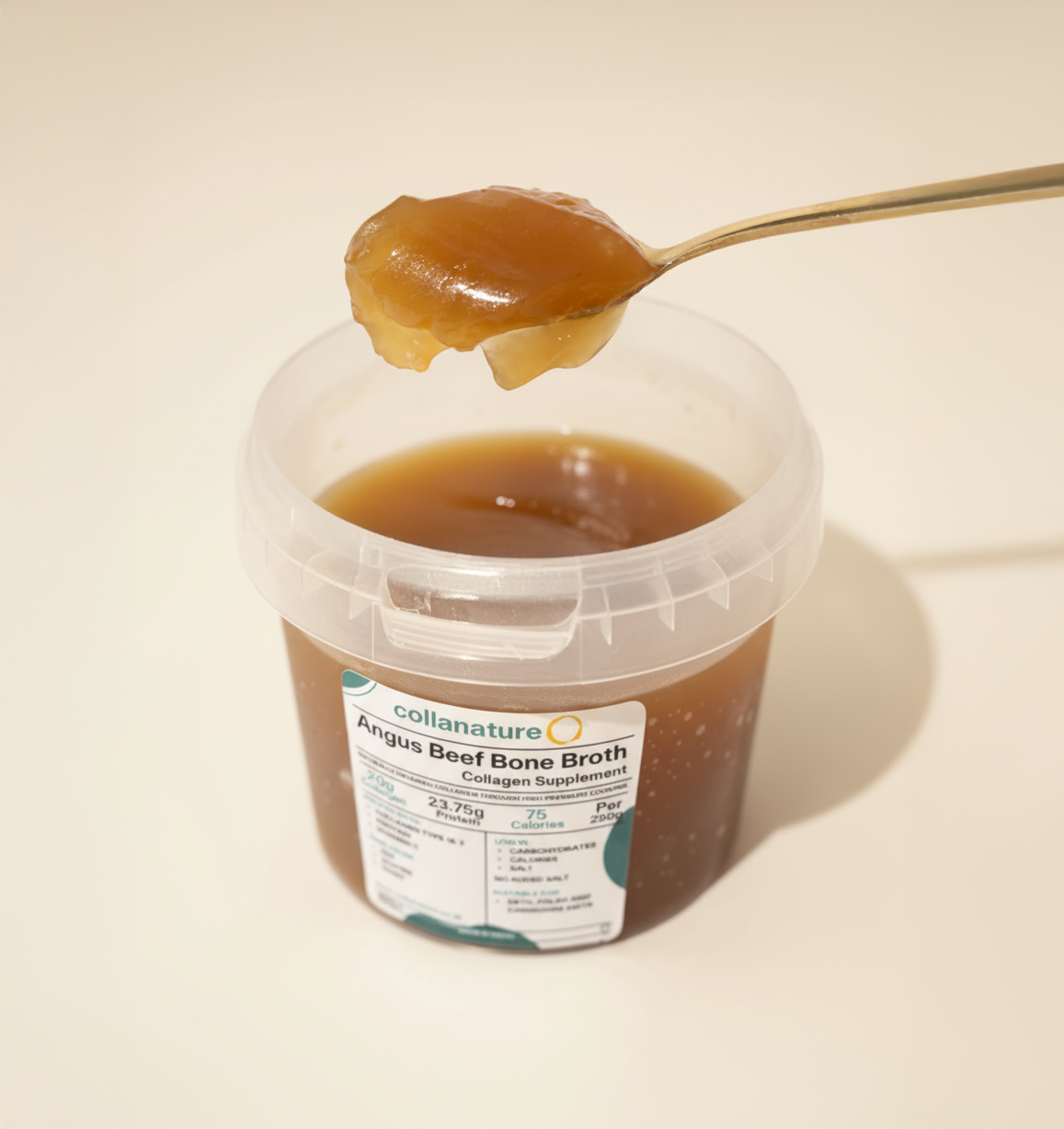
A slow-cooked Angus beef bone broth collagen like Collanature Natural Collagen contains more than just protein; it is a source of glycosaminoglycans (GAGs). These complex compounds, including glucosamine, chondroitin, and hyaluronic acid, are naturally found in cartilage and joint fluid. Unlike isolated tablets that provide single ingredients, bone broth delivers them in a food-based matrix. Their primary role is to attract and hold water within the joint capsule, contributing to that "cushioning" effect during impact activities like walking or running.
Why "Food First" Works
Many people take glucosamine sulphate tablets and notice little change. This can be due to how they are absorbed or to the overall quality of the product. Consuming these compounds in their natural, liquid or paste form (broth) mirrors how our ancestors maintained their mobility—by eating the connective tissue of animals, not by swallowing chalky pills.
3. The 90-Day Timeline: Managing Expectations
Joints are slow metabolic tissues. Unlike skin, which renews quickly, cartilage has a poor blood supply (it is avascular), meaning nutrients take longer to reach the target area. We usually encourage customers to think in terms of a "90-Day Mobility Protocol," rather than expecting overnight changes.
- Month 1 (Loading): Consistent intake to saturate the body with amino acids (for example, 1–2 tablespoons daily of collagen-rich broth).
- Month 2 (Noticing): Many people report gradually reduced morning stiffness and more comfortable movement.
- Month 3 (Maintenance): Ongoing support for flexibility and comfort during daily tasks and gentle exercise.
If you stop after two weeks because "it hasn't worked yet," you may be stopping just before the nutrients have had time to accumulate in the joint matrix. Slow tissues require patience and consistency.
4. Foods That Help vs. Foods That Harm
You cannot out-supplement an inflammatory diet. Taking collagen while eating high-sugar, ultra-processed foods is like pouring water into a bucket with a hole. To support the protocol, reduce common "inflammation triggers" such as refined sugar, industrial vegetable oils high in omega-6, and excessive alcohol. Increase "mobility allies" like oily fish (omega-3), turmeric, ginger, plenty of colourful vegetables, and of course, a daily cup of collagen-rich bone broth. This dual approach—removing the harm and adding the support—is a powerful way to look after long-term comfort.
5. Frequently Asked Questions
1. Will this help my creaky knees?
While we cannot make medical claims about specific conditions, many customers tell us that building a routine with collagen-rich bone broth, movement, and joint-friendly foods helps them feel more flexible and less “creaky,” especially in the mornings. Results are individual, and this should always sit alongside advice from your healthcare professional.
2. Can I take this alongside glucosamine tablets?
In general, collagen-rich bone broth and glucosamine supplements are taken together without issues, but if you are on medication or under medical supervision, check with your doctor or pharmacist first. Many people find that once they are on a consistent dose of high-quality bone broth (which naturally contains glucosamine-related compounds), they are happy to simplify their supplement shelf.
3. Is it good for runners?
Running places repeated impact on the joints. Collagen is a key structural protein in tendons, ligaments, and cartilage, so supporting your overall protein and collagen intake is a smart idea if you love pounding the pavement. Many runners use bone broth as part of their recovery routine, alongside good shoes, strength work, and adequate rest.
4. How much should I take for stiffness?
For general “wear and tear” support, many adults aim for 1–2 tablespoons of concentrated collagen broth per day (following the serving advice on the jar). Splitting this into a morning and evening serving can make it easier on digestion and helps spread the amino acid supply across the day.
5. Does weather affect joint pain?
Many people notice that their joints feel more sensitive during cold, damp, or stormy weather. Changes in barometric pressure may influence how tissues feel. While we cannot control the weather, staying warm, moving regularly, staying hydrated, and keeping your collagen intake consistent can all help your joints feel more resilient.
Final Thoughts
Movement is life. Stiffness is not something you simply have to accept as an inevitable part of ageing. By giving your body the right nutritional tools, moving regularly, and staying patient with slow tissues like cartilage and ligaments, you can support your joints to keep moving freely for years to come.
[Shop Collanature: Support Your Mobility – Natural or Wild Berries]


Recent Post