Cart
0

1. The “More Is Better” Trap
In the supplement world, we are conditioned to believe bigger numbers automatically mean better value. If Brand A offers 10,000 mg and Brand B offers 20,000 mg for the same price, Brand B looks like the obvious winner. But biology is not a calculator. What matters is the form, the ingredient list, and whether you will actually take it consistently.
The Traffic Jam Analogy
Imagine your gut is a motorway entrance. It can only let a certain number of cars (nutrients) through at once. If you try to force everything through in one go, you get a traffic jam. Instead of chasing the biggest label number, look for a product you can use daily, without turning your routine into a chemistry experiment.
2. The “Leaky Bucket” Principle
Collagen is a protein. Your body breaks it down into amino acids and small peptides, then uses those building blocks where needed. If your overall diet is lacking key nutrients, you may still feel like you are “pouring into a bucket with holes”.
Why Vitamin C Still Matters
Vitamin C contributes to normal collagen formation for the normal function of skin and connective tissues. That is why it is smart to pair collagen-rich foods with vitamin C sources (for example citrus, kiwi, peppers, or berries) as part of your wider diet.
3. The “Label Games” Problem
Not all “high-protein” products are comparable. Some powders rely on flavour systems, sweeteners, or bulking agents to improve taste and texture. Another issue discussed in the wider supplement industry is the use of free amino acids to inflate certain protein test results. The practical takeaway is simpler than the drama: prioritise transparent nutrition, a short ingredient list, and a format you can stick with.
Trusting the Source
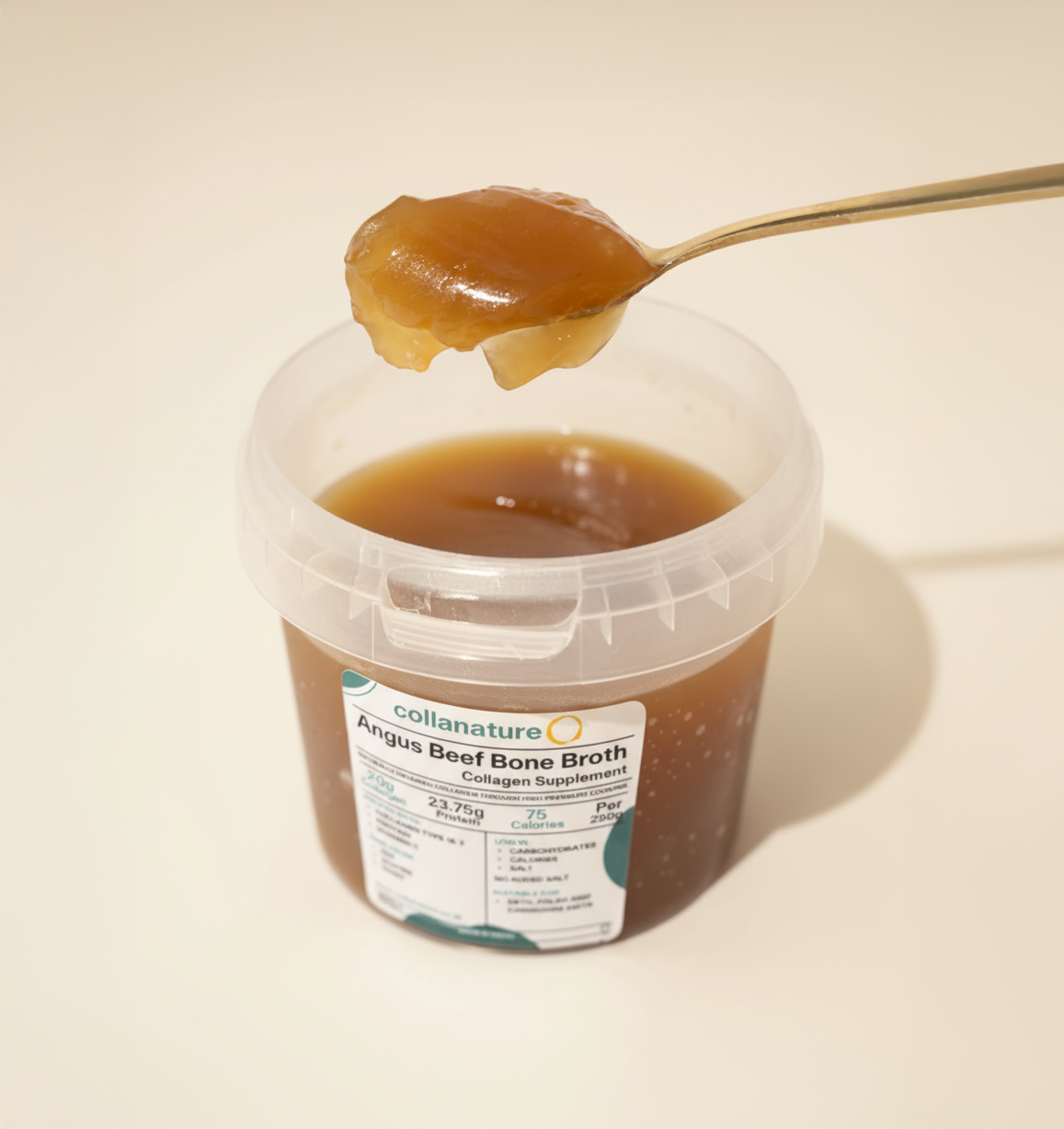
Collanature is presented as a whole-food style bone broth collagen made from beef bones, joints and cartilage, plus vegetables and water, with no additives or preservatives listed. It is sold in packs, with serving guidance on the pack rather than a scoop-based “tub” format.
Collanature Original (Unsweetened) – view product
4. The Fat Connection: Why “Zero Fat” Isn’t the Only Goal
We have been taught to hunt for “zero fat” labels. Yet dietary fat plays roles in a balanced diet, including supporting the absorption of fat-soluble vitamins. If your collagen drink is naturally low in fat, you can simply enjoy it as part of a meal that includes healthy fats (like olive oil, avocado, or egg yolk) instead of building your whole routine around “fat-free” rules.
5. Frequently Asked Questions
Quick answers, written the way people actually ask them.
How much collagen is commonly used in studies?
Human studies vary by outcome and product type. Many trials use daily amounts in the single-digit grams range, while others go higher. The evidence is mixed and outcomes are usually modest. Use research as context, but follow the serving guidance on your product and focus on consistency.
Can I take too much collagen?
Collagen is protein, so your body processes it like other proteins. Very large intakes may be uncomfortable for some people (for example digestive upset). If you are unsure, start with the recommended serving and speak to a healthcare professional, especially if you have a medical condition.
Do I need vitamin C with collagen?
You do not need to take vitamin C “at the same second”, but adequate vitamin C intake matters for normal collagen formation. The simplest option is dietary: include vitamin C-rich foods alongside your usual meals.
Does heat ruin collagen?
Heating changes texture (gel melts), but it does not “erase” protein from food. Bone broth collagen is commonly used in warm drinks, soups, and cooking. Use temperatures that are comfortable to consume and fit your routine.
How do I use Collanature day to day?
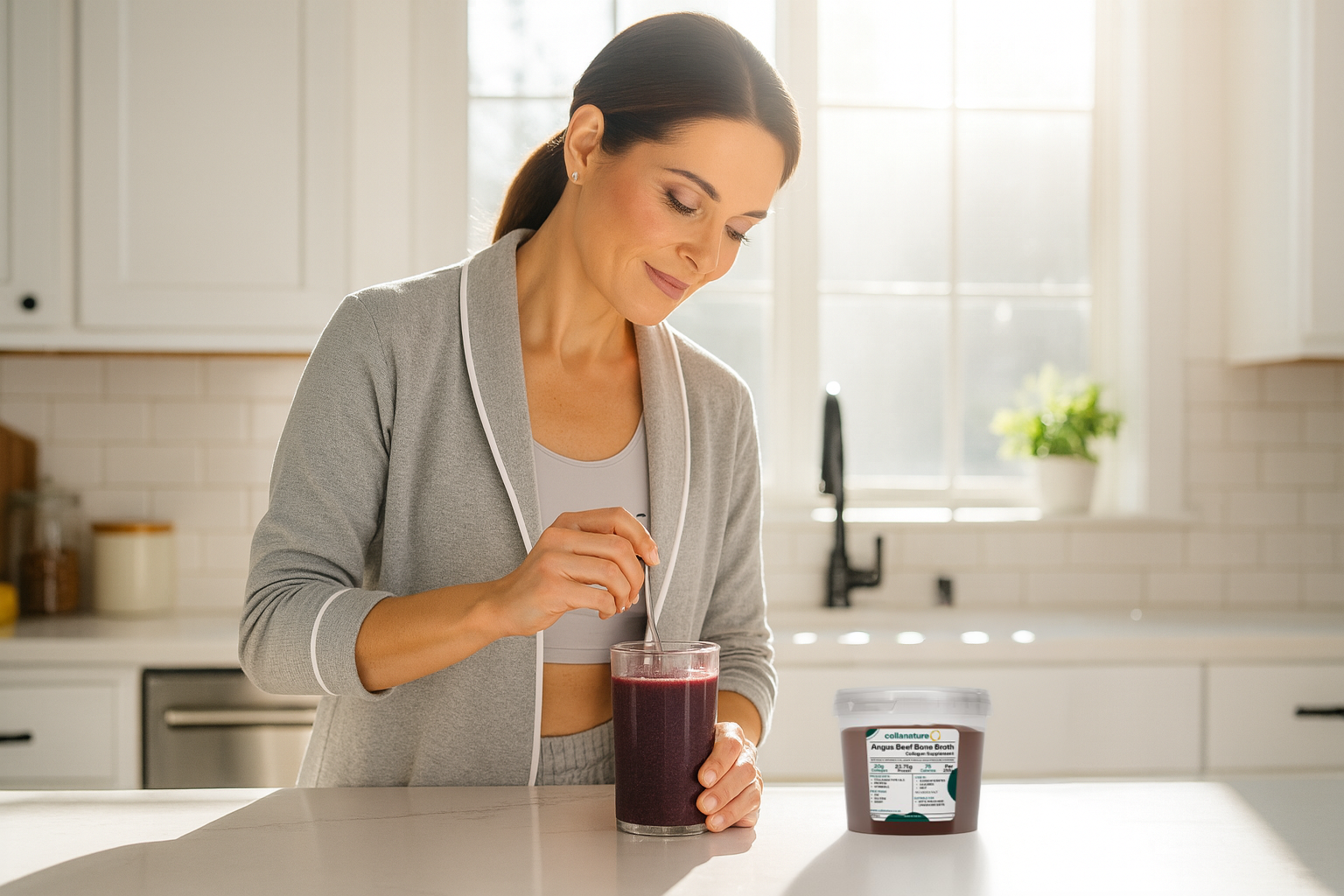
Collanature is sold in packs and the site describes a daily portion of about 50 g. A simple routine is to dissolve a portion in warm water or add it to soups and recipes, then keep the habit consistent.
Final Thoughts
Do not be dazzled by big numbers on packaging. Prioritise an ingredient list you trust, a format you will stick with, and a diet that supports your overall nutrition. This article is educational and not medical advice; for personalised guidance, speak to a qualified healthcare professional.
Shop Collanature: Original (Unflavoured) or Wild Berries.


Recent Post