Cart
0

1. What is the Difference?
While they share the same basic ingredients (bones, water and often vegetables), the difference lies in the simmering time and the protein density. Culinary stock is simmered for a short period (3–4 hours) primarily to extract flavour for cooking; it is typically thin, watery and low in protein (around 2–3g per serving). Functional bone broth is simmered for much longer (often 24–48 hours) to extract more collagen and minerals, then concentrated. This creates a thick, gelatin-rich broth that can deliver a meaningful amount of protein (over 10g per serving in a well-made broth), relevant for tissues like joints and the gut.
The Supermarket Illusion
We have all seen them: the premium pouches of liquid bone broth lining the shelves of high-end supermarkets. They look authentic and artisan. However, turn the pouch over and check the nutritional panel. You will often find that a 500ml pouch is mostly water. You are effectively paying a premium price for hydration. While these liquids are excellent for making a risotto taste good, they often lack the density required to make a biological difference to your body.
2. The "Water Tax": Why Concentrate is Smarter
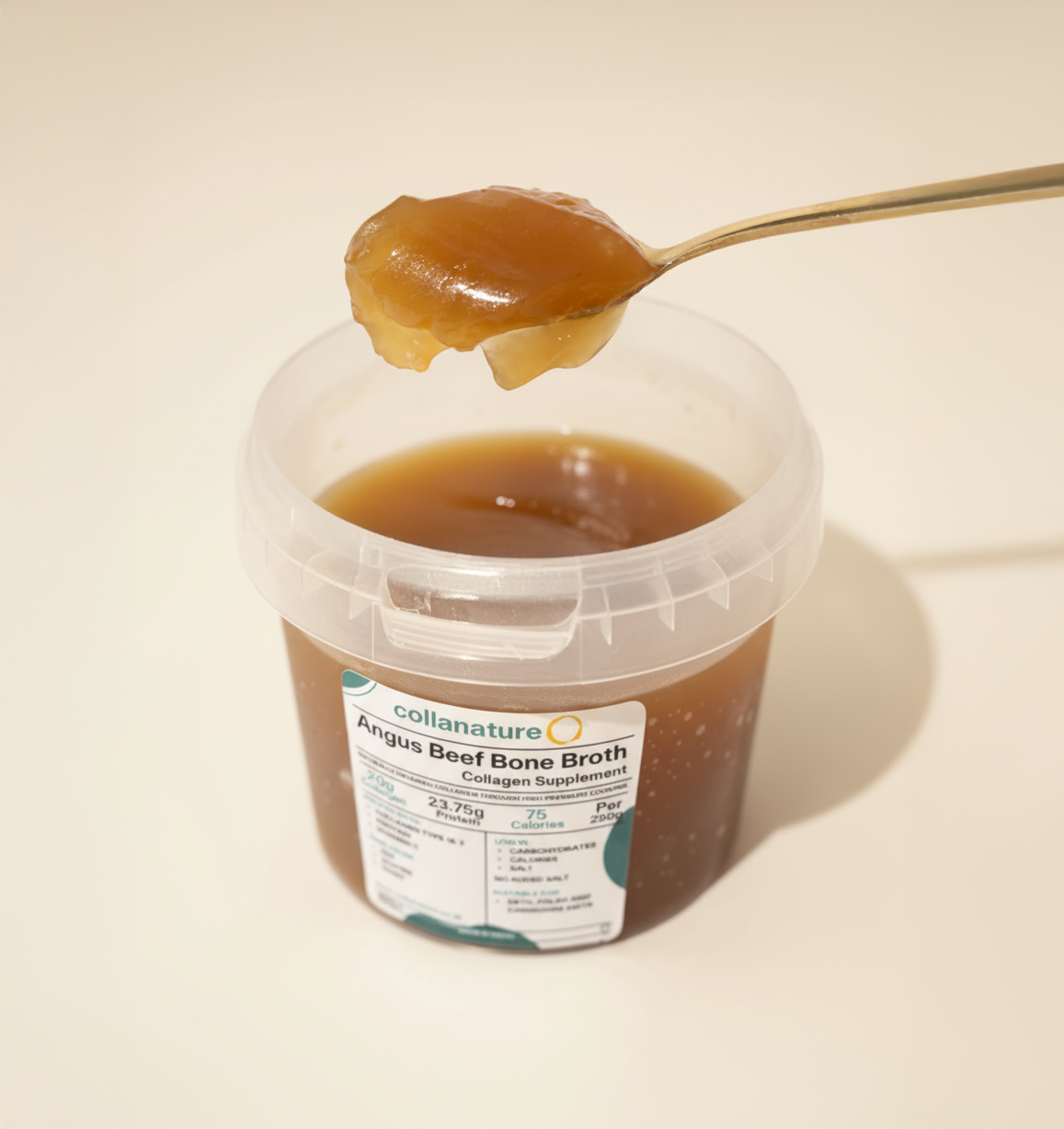
When you buy liquid broth, you are paying to ship water around the country. Many pouches of liquid broth are more than 90% water and less than 10% extract. Collanature’s collagen broth is cooked down to be super-concentrated, so you get the collagen-rich part in a compact format. By adding your own hot water at home, you create a drinkable broth with similar flavour but at a fraction of the cost and with a significantly lower carbon footprint.
Potency per Spoonful
To get the same amount of collagen found in one tablespoon of a concentrated collagen broth like Collanature, you would often need to drink two to three cups of a standard supermarket liquid stock.
- Stock: Great for soup bases, light flavour.
- Concentrate: A nutritional powerhouse. It is efficient volume. You don't need to consume litres of liquid to get your daily amino acids.
3. Sodium Levels: The Hidden Salt Trap
Culinary stocks are designed to season food, so they are often loaded with salt. A single stock cube or pot can contain up to 50% of your daily recommended salt intake. This makes them unsuitable for drinking as a daily wellness tonic. Functional broth is better kept lower in sodium, allowing you to consume higher amounts of protein and then adjust seasoning to your own needs.
4. Food Waste: The Shelf Life Problem
Liquid broth has a major logistical flaw: once opened, it spoils quickly. Because of the high water content, bacteria can grow rapidly, meaning you typically have to consume the entire pouch within 2 days or pour it down the sink. Concentrated collagen broth has a naturally lower water activity than ready-to-drink liquids, which helps slow spoilage. A frozen, super-concentrated product like Collanature is designed to be thawed and used gradually over time; always follow the storage instructions on your jar, but you do not have the same 1–2 day use-up pressure as with opened liquid stock.
5. Frequently Asked Questions
1. Can I use Collanature as a stock?
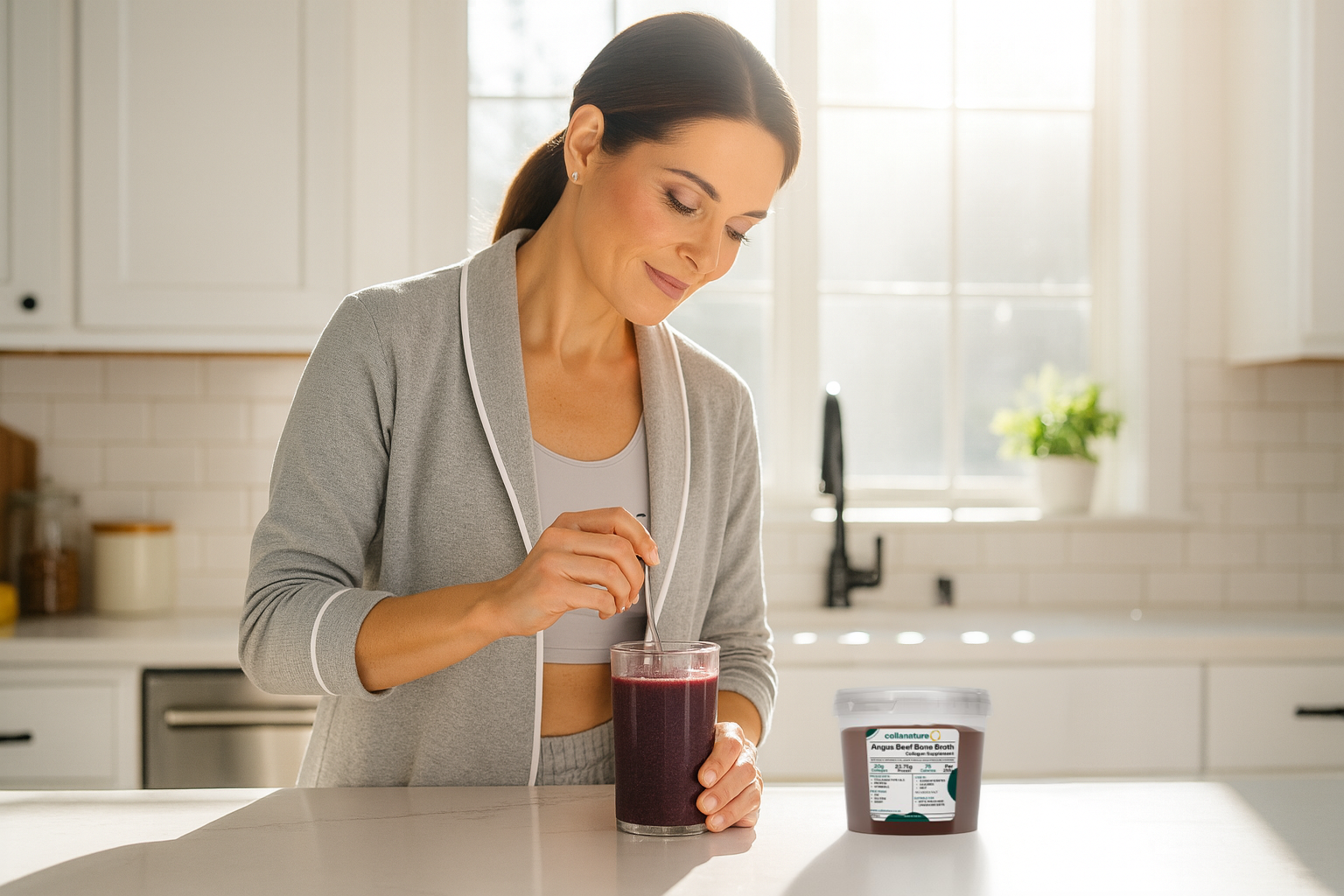
Yes, absolutely. It is the ultimate "instant stock." Just dissolve a tablespoon in 500ml of boiling water, and you have a rich, high-protein beef stock for your gravies, stews, or casseroles.
2. Why is stock cheaper than broth?
Because stock is faster to make (less energy used) and uses more water (volume) and less bone (raw material). Broth requires much longer cooking time and a higher ratio of bones to water.
3. Does stock contain collagen?
Very little. The short cooking time extracts flavour but is not long enough to break down the dense bone matrix and release the gelatin (collagen) in meaningful amounts.
4. Is "Bone Broth Flavour" the same thing?
No. If you see "Bone Broth Flavour" on a packet of crisps or instant soup, it is likely a yeast extract or synthetic flavouring. It contains virtually no nutritional benefit.
5. How much protein should I look for?
For a functional benefit, look for at least 9–10g of protein per serving. Most culinary stocks offer less than 3g.
Final Thoughts
If you are making a risotto, liquid stock is fine. But if you are investing in your health, don't pay for water. Choose the density, purity, and potency of a real concentrate.
Shop Collanature: Original (Unflavoured) or Wild Berries.


Recent Post