Cart
0

1. When Eating Becomes a Challenge
For anyone experiencing severe stomach sensitivity, mealtimes are not a pleasure. They can be a source of daily anxiety. The fear that a wrong bite will trigger hours of discomfort leads many to severely restrict their diet, living on dry toast and water.
This creates a difficult cycle. The body needs nutrients to maintain the stomach lining, but the stomach may feel too sensitive to process complex meals. You need a "Safe Harbour." This is a food that provides high-density nutrition without requiring heavy mechanical digestion or stimulating the system. Bone Broth Concentrate fits this criteria perfectly. It acts as a liquid nutrient delivery system that provides a truce to a sensitive stomach.
2. Liquid Gold for Mucosal Support
Your stomach lining is protected by a natural layer of mucus. When this layer is compromised by stress or lifestyle factors, the internal environment can feel less comfortable.
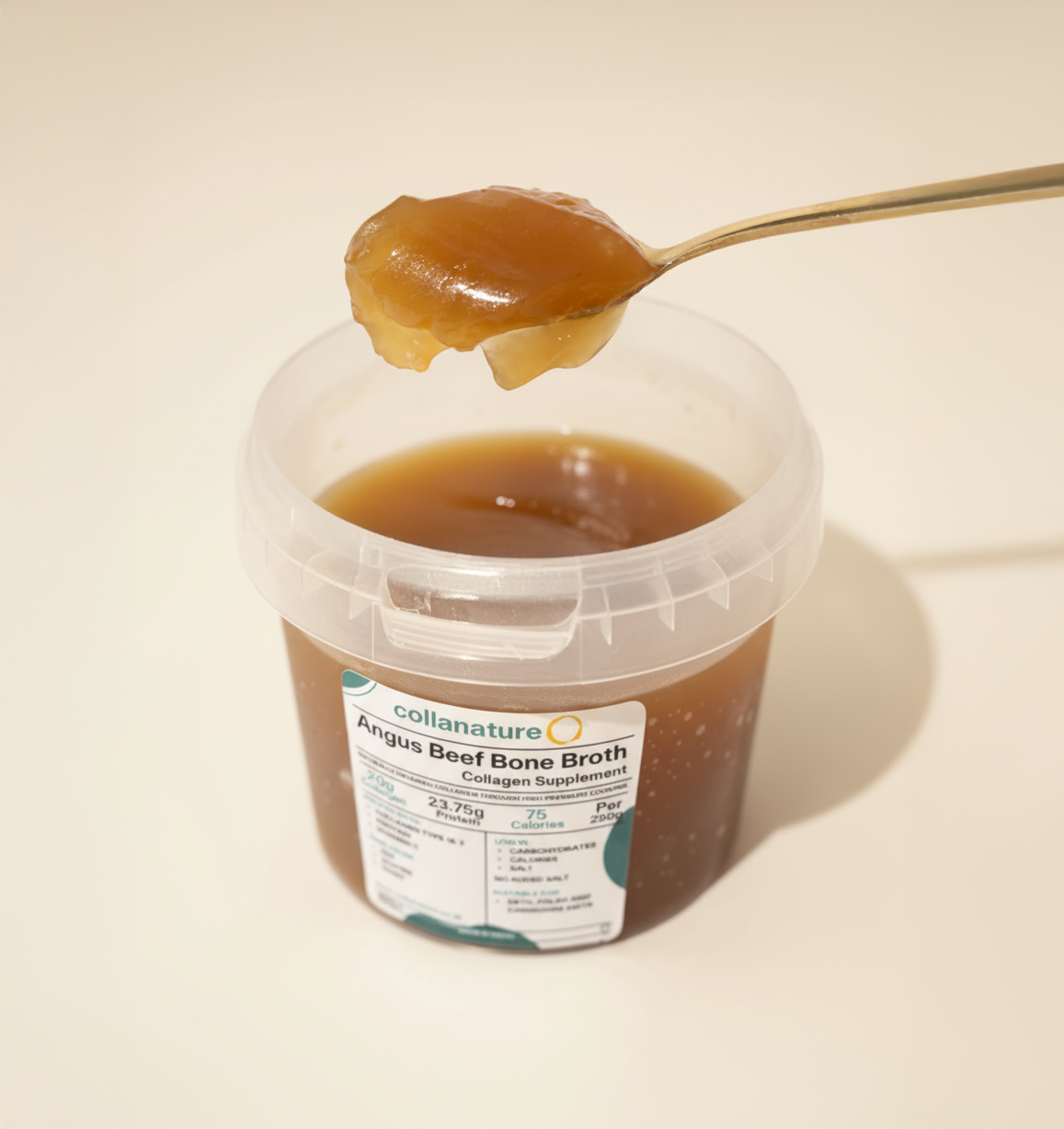
Bone broth is naturally rich in gelatin, which is mucilaginous and hydrophilic (water-holding). When you enjoy warm gelatin, it mimics the texture of the body’s natural protective secretions. While it does not replace them, it provides a soothing, viscous coating that covers sensitive areas. This helps manage the direct contact between digestive processes and the lining, allowing the system to feel calm and supported.
3. Why Gentle Protein Matters
Traditional advice for an upset stomach often focuses on bland carbohydrates like rice or toast. While these are easy on the palate, they provide very few structural building blocks. To maintain tissue and support your foundation, you need high-quality protein.
However, solid protein sources can be difficult to digest when you are sensitive. Bone broth provides the protein of a traditional meal in the form of a gentle liquid. It delivers Glycine and Proline (the specific amino acids required for connective tissue maintenance) without the roughage or fat that can often cause a reaction.
4. Encouraging Digestive Rest
Recovery requires energy. If your stomach is constantly working to break down heavy meals, it has less energy available for natural maintenance. Wellness professionals often use bone broth as a tool for "Digestive Rest".
By consuming liquid nutrition during periods of sensitivity, you drastically reduce the mechanical workload of the stomach muscles. You keep your nutrient intake up, which prevents fatigue, but you allow the organ itself to rest. This period of calm is often exactly what the body needs to reset its natural balance.
5. Frequently Asked Questions
1. Is bone broth acidic?
No. A properly made bone broth is generally pH neutral or slightly alkaline forming. It does not add to the acid load of the stomach, making it a soothing choice for most people.
2. Can I drink it if I have a very sensitive stomach?
While you should always follow your doctor’s dietary advice, bone broth is widely considered a safe, non-irritating food. We recommend avoiding black pepper or chilli, which can be irritants, and sticking to our Unsalted version for maximum gentleness.
3. Will it interfere with my routine?
Bone broth is food, so it generally fits into any routine. If you are using specific digestive supports, liquid broth is often much easier for your system to handle than solid food.
4. Can I add vegetables to the broth?
During periods of high sensitivity, we recommend drinking just the liquid. Solid fibres can sometimes be too much for a delicate lining to handle. Stick to the liquid nourishment until you feel more robust.
5. How hot should I drink it?
We recommend warm, not boiling. Extreme heat can be an irritant to sensitive tissues. Let the broth cool to a comfortable sipping temperature to ensure a soothing experience.
Final Thoughts
When your stomach feels sensitive, you do not have to settle for poor nutrition. By choosing nutrition that is chemically gentle and physically soothing, you can nourish your body while supporting a state of calm and comfort.
👉 Shop here: Shop Collanature: The Soothing Choice for Sensitive Stomachs.


Recent Post