Cart
0

1. The "Instant Gratification" Mentality vs. Biology
We live in an era of next-day deliveries and instant digital fixes. Unfortunately, human biology does not run on "instant" time. Our connective tissues have a naturally measured metabolic rate. Unlike the surface of your skin, which renews relatively quickly, deeper structures require a steady supply of nutrients over several months to maintain their strength.
If you judge a collagen protocol after just two weeks, you are stopping before your system has had the chance to fully utilize the new building blocks. Consistency is the bridge between a "trial" and real results.
2. The "Iceberg" Effect: Support Below the Surface
When you start incorporating Collanature Bone Broth into your routine, the most important work happens where you can't see it. For the first few weeks, you might not notice an outward change. This is entirely normal.
Your body is highly efficient; it prioritizes amino acids for essential internal maintenance first. Only once these foundational nutritional needs are met does the body begin allocating resources to "lifestyle" support, such as skin radiance and joint mobility. Think of it as filling a tank: the car only moves once the fuel reaches the required level.
3. The Timeline: Your 90-Day Journey
Real change is a gradual accumulation of daily habits. Based on general nutritional research into tissue turnover, here is the typical progression:
- Month 1: The Introduction Phase. You are saturating your system with Glycine, Proline, and Hydroxyproline. During this stage, your body is "stocking the shelves" with the raw materials needed for maintenance. You may begin to notice better hydration in your skin.
- Month 2: The Accumulation Phase. The nutrients are now being integrated into your daily physiology. Many users report feeling more "fluid" during their morning walks or experiencing better comfort during physical activities.
- Month 3: The Optimization Phase. This is the "sweet spot." The cumulative effect of 90 days of consistent nourishment means your system feels more robust and supported. At this stage, the habit is set, and the benefits become part of your daily baseline.
4. Nourishment vs. Masking
It is crucial to understand the difference between a pharmaceutical approach and functional food support.
- Temporary Fixes: These are often designed to mask signals or provide localized, temporary comfort. They work quickly but do not contribute to the body’s long-term nutritional structure.
- Bone Broth: This is a "bottom-up" strategy. It provides the literal building blocks, collagen, minerals, and amino acids, to support the normal function of the structures you use every day.
5. Why an "Initial Serving" Increase Matters
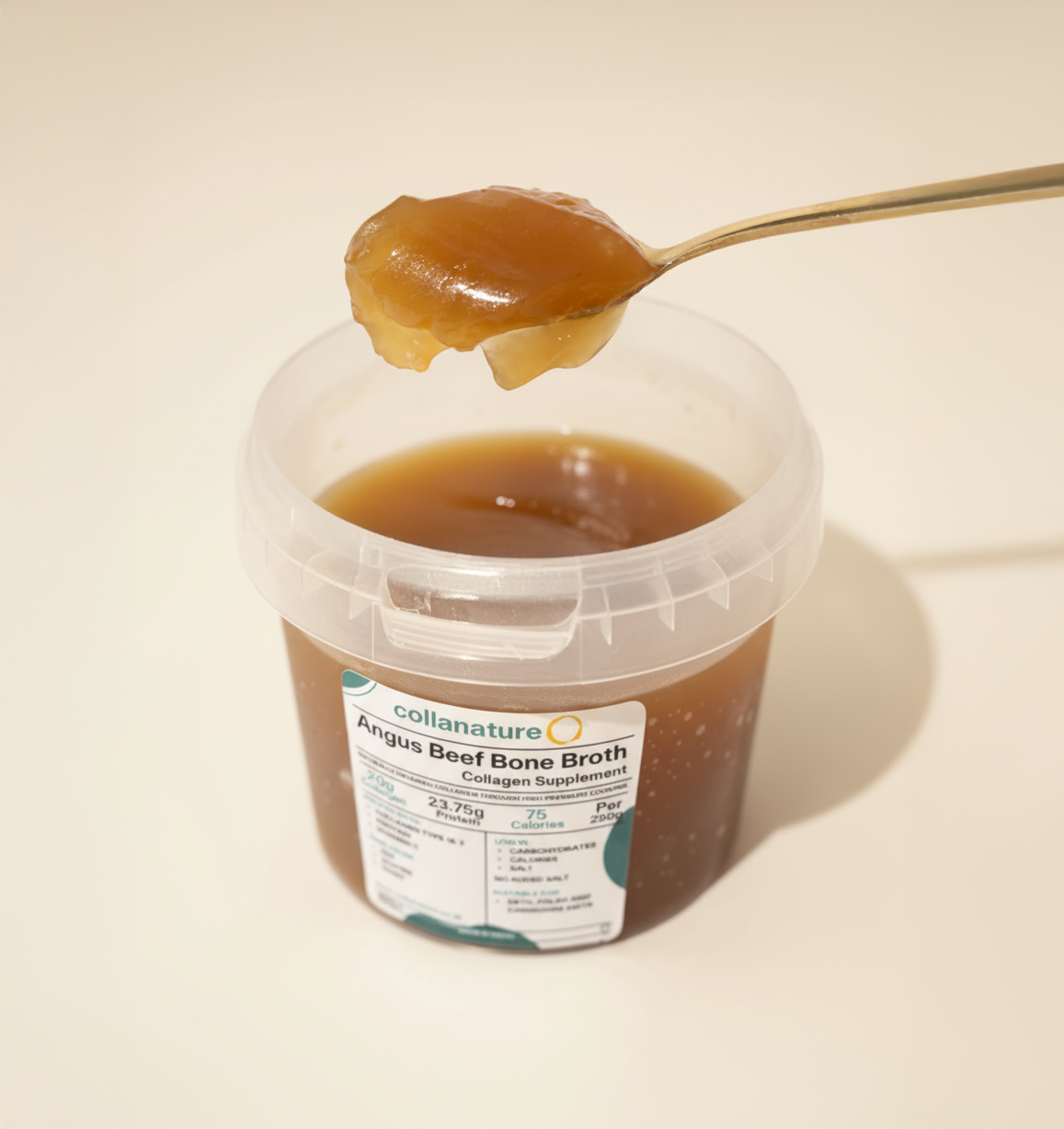
If you are starting from a point of nutritional depletion, a standard maintenance serving might not be enough to move the needle quickly. We often suggest a "Loading Phase" for the first 30 days, incorporating two tablespoons of concentrate daily instead of one.
This provides a dense supply of nutrients to support your foundation more effectively. Once you feel the benefits (usually around the 60-90 day mark), you can transition to a single daily "maintenance" spoon to keep your system balanced.
The "Watering the Plant" Analogy: Imagine a houseplant that hasn't been watered for weeks. The soil is hard and cracked. A tiny drop of water will simply run off the surface. You need to thoroughly soak the soil for it to become receptive and healthy again. Your body needs that initial "soak" of high-quality nutrition to regain its natural balance.
6. Frequently Asked Questions
1. Can I take more to speed up the results?
While you can increase your intake, biology has a natural "speed limit" for how quickly it can incorporate nutrients. Consistency is far more powerful than intensity; a moderate daily serving is better than a large serving once a week.
2. What if I miss a day?
Don't worry, life happens! Just return to your routine the next day. The goal is to maintain a steady "background" level of these essential amino acids.
3. Will I see skin changes before joint changes?
Often, yes. Skin cells have a faster renewal cycle than the denser tissues in our joints. A healthy "glow" is usually the first sign that the collagen is being effectively absorbed and utilized.
4. Is there anyone it won't work for?
In cases of significant structural challenges, nutrition acts as a support for comfort and mobility but cannot replace medical intervention. It is best for supporting an active lifestyle and daily comfort.
5. Should I stop after the 90 days?
Nutrient turnover is a continuous process. If you stop providing the raw materials, your body will eventually return to its previous nutritional state. Think of bone broth like a healthy diet: you maintain the habit to maintain the results.
Final Thoughts
True progress is a marathon, not a sprint. The most significant transformations belong to those who understand that biological time cannot be rushed. Give your body the 90 days of nourishment it deserves.
👉 Shop here: Choose Real Food: Shop Collanature Concentrate.


Recent Post