Cart
0
It’s Not Just an Old Tradition
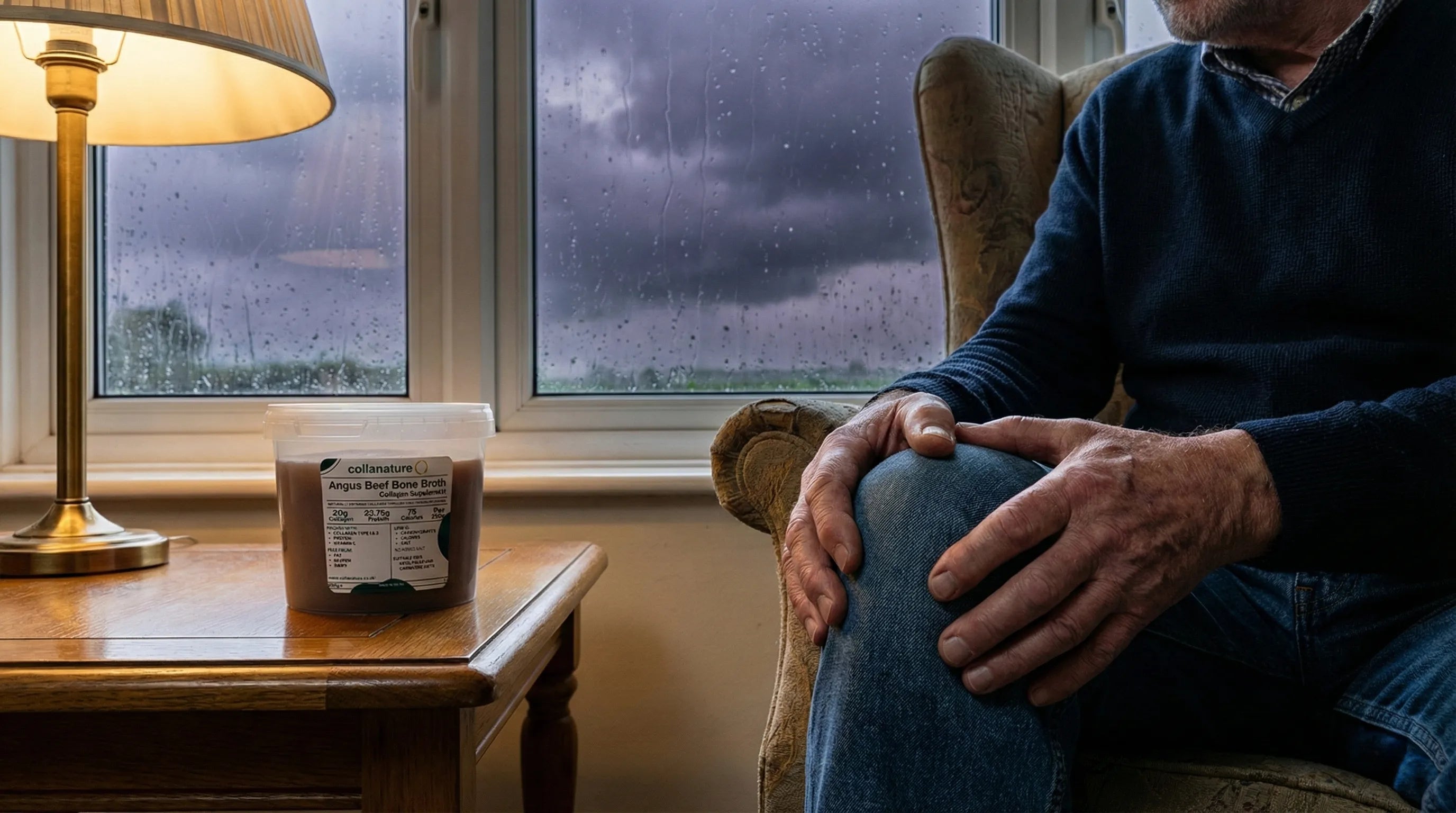
We have all heard the saying, "It’s going to rain, I can feel it in my knees." For years, this was dismissed as simple folklore. However, modern research has highlighted that "Meteosensitivity" is a recognized biological response to our environment.
It isn't the rain itself that causes these sensations; it is the drop in Barometric Pressure (atmospheric pressure) that precedes a storm. When the weight of the air pressing against your body drops, your tissues can experience a subtle, microscopic expansion. If your joints are already well-acquainted with the demands of an active lifestyle, this expansion can make the surrounding area feel less comfortable, leading to that familiar seasonal stiffness.
The "Balloon" Analogy
Imagine a balloon placed inside a small box. If you lower the air pressure outside the box, the balloon expands and pushes against the walls. Your joint capsule is the "balloon," and the surrounding structure is the "box."
When the pressure drops as a storm approaches, these tissues may expand. Healthy, resilient connective tissue is better equipped to manage these environmental shifts than tissue that lacks nutritional support.
Why Collagen Helps You "Weather-Proof"
The goal is to increase Tissue Resilience. While you cannot control the British clouds, you can improve your body's internal support structure. Connective tissue rich in Collagen and Elastin is naturally denser and better prepared to withstand changes in external pressure.
Furthermore, the nutrients naturally found in bone broth, including Hyaluronic Acid, help maintain the quality of the synovial fluid. This acts as a natural buffer, helping your system manage pressure changes within the joint capsule smoothly and comfortably.
Keeping the Heat In
Meteosensitivity is often more noticeable in cold, damp conditions because lower temperatures can affect the fluid nature of your joints and slow down circulation.
The Winter Protocol: On low-pressure days (grey, heavy skies), enjoy a warm cup of Collanature Bone Broth. The combination of the hot liquid and the amino acid Glycine supports healthy circulation. This ritual helps counteract the stiffening effects of the cold, providing soothing comfort from the inside out.
The Role of Hydration in Structural Integrity
It sounds counter-intuitive, but hydrated tissue is far more robust than dry tissue. If your internal structures lack moisture, they have less "give" to manage the expansion caused by a barometric drop.
Drinking Bone Broth provides essential electrolytes, such as Sodium and Potassium, which help regulate fluid balance at a cellular level. This ensures your tissues stay resilient and supported, rather than reactive to the forecast.
Why "Granny’s Broth" Was the Gold Standard
Historically, rich soups and stews were the foundation of the British winter diet. Our ancestors instinctively knew that gelatin-rich foods provided immense comfort during the damp months. They didn't need to know about barometric pressure to understand that a cup of hot "beef tea" helped maintain their mobility.
Today, we often rely on cold, processed snacks even in the depths of winter. Returning to warm, functional nutrition is a simple, effective way to align your body with the changing climate.
Frequently Asked Questions
1. Is it only rain that causes these sensations?
No. Any rapid shift in weather, such as a sudden cold snap or high humidity, can be a factor. However, the low-pressure systems associated with rain are the most common triggers in the UK.
2. Can supplements help with seasonal comfort?
While nothing can stop the weather, consistent collagen intake supports the structural integrity of your joints. This helps maintain comfort over time, making your system feel less "reactive" to the daily forecast.
3. Should I use heat pads?
Yes. Applying gentle heat to the area while enjoying a warm mug of broth supports healthy circulation, bringing fresh nutrients to the tissues and providing immediate comfort.
4. Is this common for those with a history of an active lifestyle?
Yes. Meteosensitivity is very common in individuals who have put their bodies through significant physical stress or sports challenges. It is often a sign that the system would benefit from extra structural support.
5. Does Vitamin D help?
In the UK, Vitamin D levels drop significantly during winter, which can affect overall wellbeing. We recommend pairing your bone broth with Vitamin D3 for a complete support strategy.
Final Thoughts
Don't let the forecast dictate your day. By building more resilient tissue through high-quality nutrition, you can enjoy every British season with greater comfort and mobility.
👉 Shop here: Shop Collanature: The "Wobble" Guarantee.


Recent Post