Cart
0

1. Beyond the Supplement: Why Your Environment Matters
The UK probiotic market is booming. Millions are spent annually on friendly bacteria drinks, yoghurts, and capsules. Yet, many people take them for months and report little to no change in their digestion. The problem is rarely the quality of the capsule. It is the quality of the environment it lands in.
If your gut lining is sensitive or lacks integrity, the internal terrain is not ready for new bacteria. Taking probiotics without addressing the gut lining is like throwing expensive grass seeds onto a dry, cracked concrete driveway. They simply cannot take hold.
The Garden Analogy: To understand gut health, think of a garden.
- Probiotics: These are the Seeds (flowers).
- Prebiotics: These are the Sun and Rain (food for the flowers).
- Gut Lining: This is the Soil.
If the soil is dry or lacks structure, it does not matter how premium your seeds are. They will not take root. You must tend the soil first.
2. Bone Broth: Nurturing Your Internal Soil
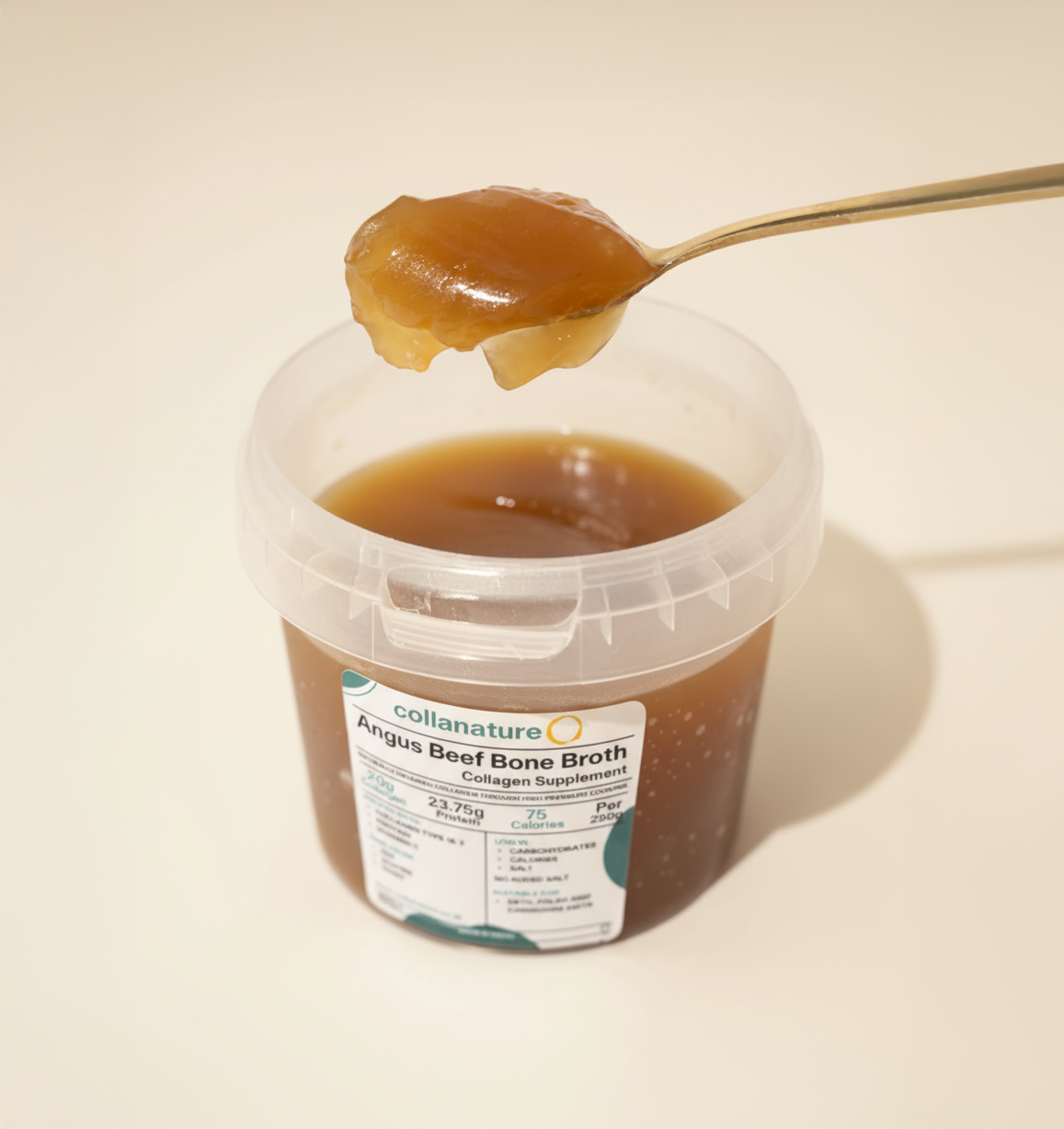
Before you plant, you must provide nourishment. Bone broth acts as a natural soil conditioner. The gelatin and glycosaminoglycans (GAGs) in the broth help maintain the mucosal barrier of the intestines.
This mucus layer is vital because it is the physical home where your beneficial bacteria live. By drinking bone broth, you are creating a plush, nutrient-rich environment. This allows your probiotics to colonise rather than passing through the system without effect.
3. The Two Stage Approach for Gut Maintenance
We recommend a two-stage approach for optimal digestive maintenance.
Stage 1 (Preparation): Focus purely on bone broth and cooked, easily digestible foods for two weeks. This soothes the system and supports the natural barriers of your garden.
Stage 2 (Planting): After the initial two weeks, introduce your probiotic supplement or fermented foods (like sauerkraut or kefir). Because you have prepared the terrain, the survival rate of these beneficial bacteria increases. You effectively get more value from your probiotic supplement.
4. Prebiotics vs Probiotics: Understanding the Roles
Probiotics are the live bacteria themselves. Prebiotics are the fibres that feed them. Interestingly, the glycine in bone broth can support the gut environment in a similar way.
It helps modulate the internal terrain, discouraging the growth of unwanted elements while supporting the natural pathways of beneficial strains. It acts like a selective fertiliser. It helps the roses grow but does not encourage the weeds.
5. Frequently Asked Questions
1. Can I take broth and probiotics at the same time?
Yes. Just do not swallow your probiotic capsule with boiling hot broth, as the heat can affect the live bacteria. Enjoy your broth warm and take your probiotic with room-temperature water.
2. Is this why fermented foods can cause bloating?
Often, yes. If you have a very sensitive gut, introducing fermented foods can be overwhelming. Soothing the lining with broth first can help your system become more tolerant to these foods later.
3. Is yoghurt enough?
Many supermarket yoghurts are high in sugar, which can support the wrong kind of bacteria. A high-quality probiotic or traditional kefir is often a better choice. However, they both still require a healthy environment to work.
4. How do I know if my soil is healthy?
Regular habits, a lack of bloating after meals, and good energy levels are signs of a healthy internal environment. If you experience food sensitivities or frequent discomfort, your soil may need tending.
5. Does broth contain live bacteria?
No. Bone broth is pasteurised by the long cooking process. It is sterile. Its job is not to provide the bacteria themselves, but to maintain the environment where those bacteria can thrive.
Final Thoughts
Stop wasting money on seeds that never grow. By prioritising the health of your gut lining with collagen-rich nutrition, you turn your digestive tract into a fertile garden where good bacteria can finally thrive.
👉 Shop here: Shop Collanature: Nurture Your Gut Garden.


Recent Post